
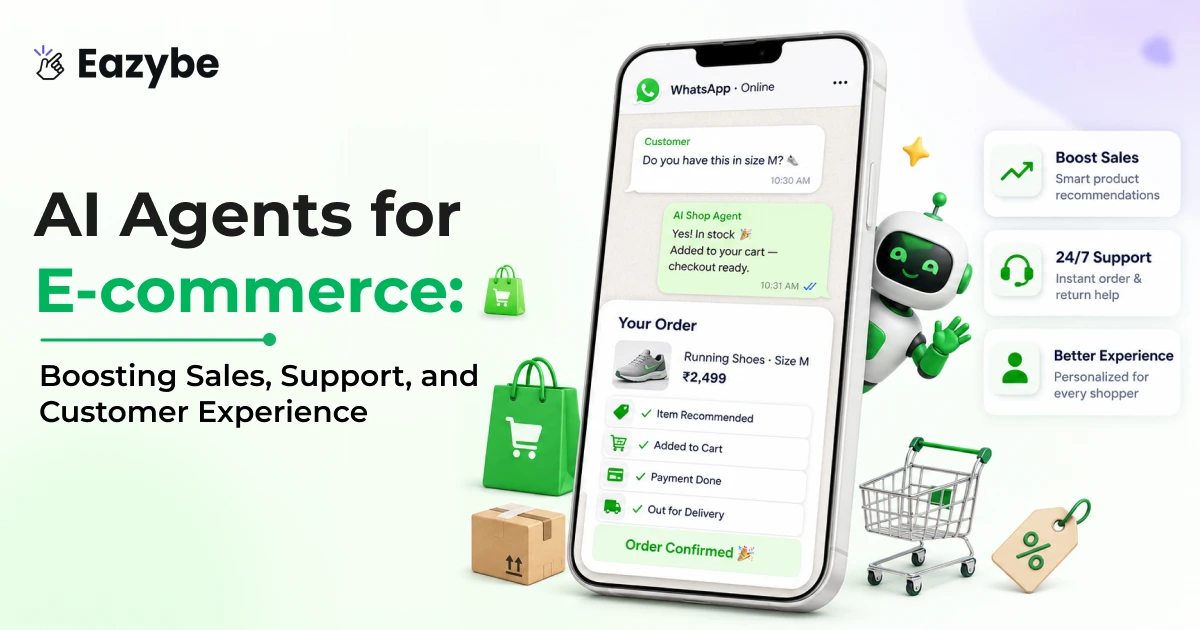


AI agents for e-commerce are quiet salespeople that never clock out and never miss a message while you sleep through your best selling hours. Most people first met this kind of agent while booking a trip. They asked a travel bot for a cheap flight and it handled the whole chat alone. That same agent now sells for stores. Most owners only notice once a rival starts replying in seconds.
At Eazybe - WhatsApp AI agents with CRM integration that live where your buyers already talk. Our AI Sales Agents qualify leads and reply instantly while your team sleeps. They sit on top of WhatsApp and push every chat into your WhatsApp CRM so nothing slips through. This blog covers what these agents really do. The wins and the messy parts too. You get the honest version and not the brochure.
What Are AI Agents For E-Commerce?
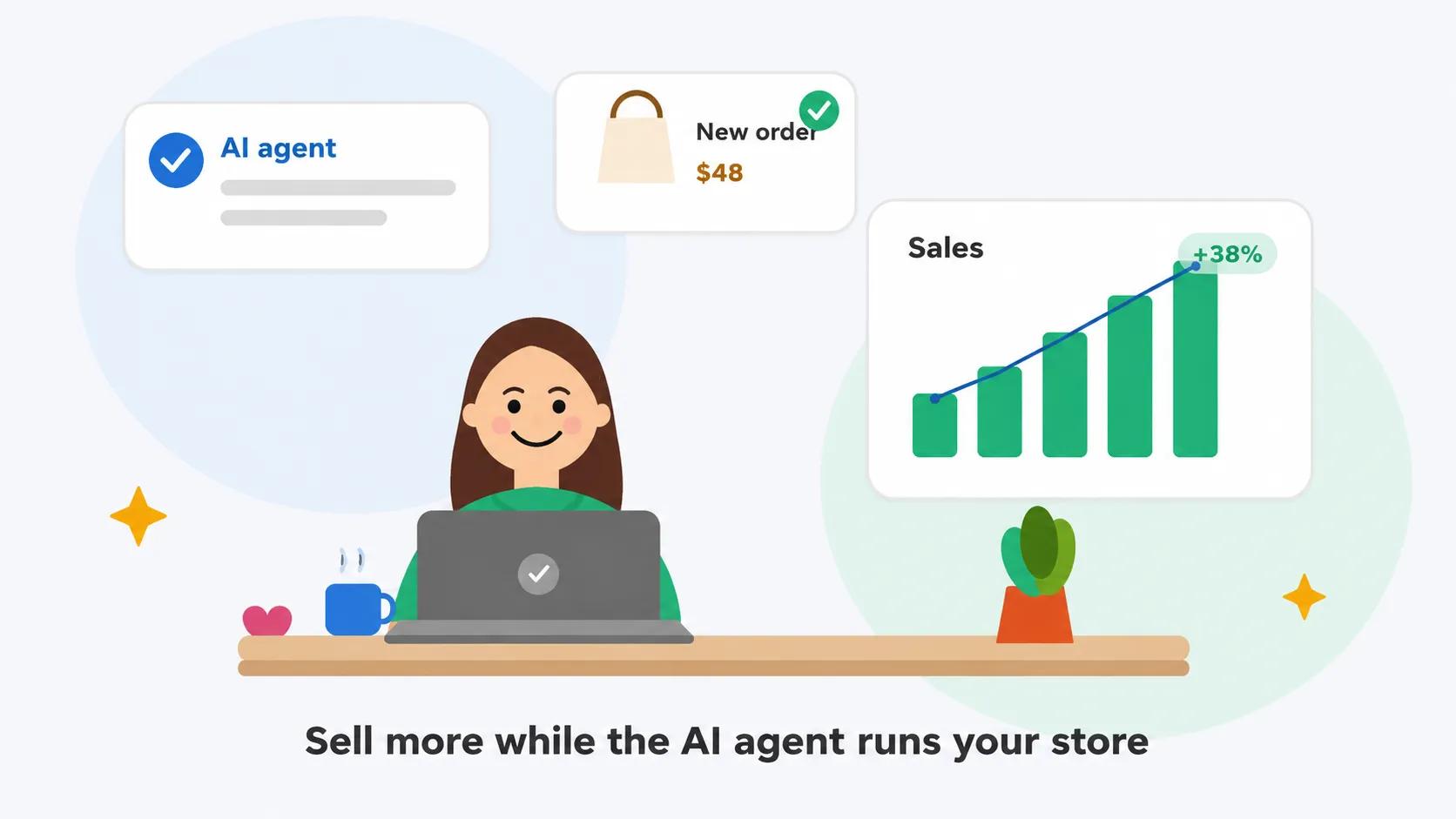
AI agents for e-commerce are self running digital workers that read a buyer message and act on it end to end. They do not wait for a script or a click. They decide to check and reply on their own much like your best rep radar on a good day.
That is what sets them apart from a chatbot. A chatbot follows a script. An AI agent makes choices. It can check an order. It can offer a refund. It can pull a product detail and reply in plain language. An ai agent for e-commerce works in steps and not in one canned line.
Think of it as a teammate that never logs off. The best agentic ai for e-commerce handles a full chat from hello to paid. Some are simple. Some are agentic AI support systems with built in order management for e-commerce that read stock and fulfillment on their own. You can also run WhatsApp automation around them so routine tasks fire on their own. The agent owns the task and not just the script.
Types Of AI Agents For E-Commerce
Most stores do not need one giant brain. They need a few focused agents that each own a job. Here are the two that move the needle first.
1. Customer Support AI Agents for E-commerce
This is where most teams start. An ai agent for e-commerce support handles the boring high volume questions and frees your humans for the hard calls. What it owns:
- Order tracking and where is my order replies.
- Address and detail changes on the spot.
- Returns and refund questions.
- Round the clock answers in any time zone.
- A clean handoff when a chat gets tense.
Good ai agents for customer support also know when to step back and pass a tense chat to a person. When a query gets messy the agent hands off cleanly into a shared team inbox where a human picks up with full context.
2. Sales and Conversion AI Agents for E-commerce
These agents chase money. They turn quiet browsers into paying buyers. What they own:
- Cart recovery before a shopper forgets
- Product picks like the right size or matching item
- Quick answers to the one doubt blocking the sale
- Gentle nudges that move a lead to checkout
- Upsell and cross sell at the right moment
Pair them with WhatsApp sales funnels and the agent walks each lead through a clear path instead of leaving them stuck. You can also feed it quick reply templates so it stays on brand while still sounding human. This is where AI agents for e-commerce automation turns browsers into buyers.
What The Sales Data Says About AI Agents For E-commerce
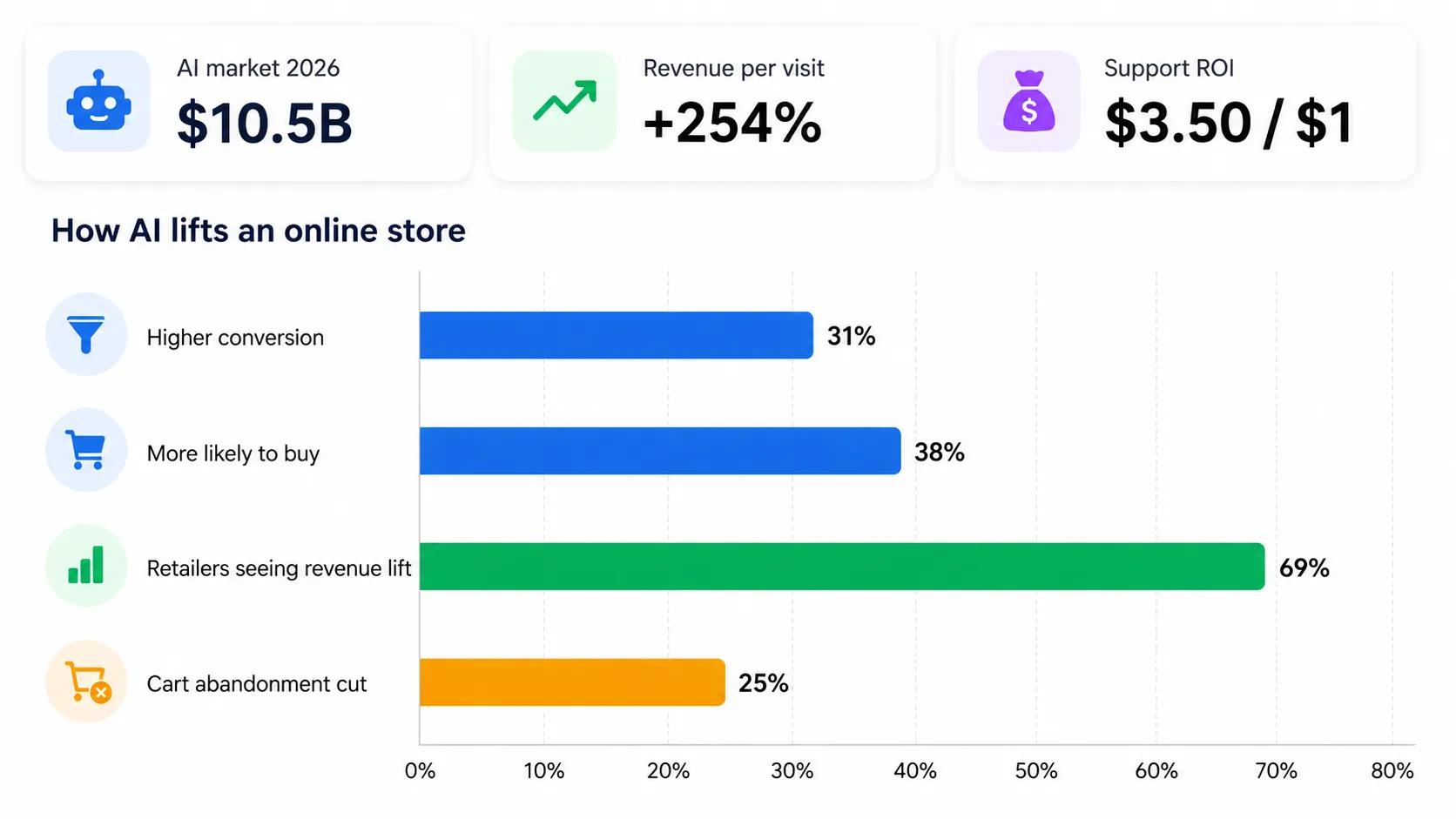
The hype is loud so let us look at numbers from named research. These figures explain why AI agents in e-commerce stopped being optional.
- The AI Agents in e-commerce market reached 9.12 billion dollars in 2025 and is set to hit 10.5 billion in 2026.
- Shoppers who arrive from AI sources convert 31 percent higher than normal traffic and are 38 percent more likely to buy.
- Revenue per visit from AI agents for e-commerce referred shoppers jumped 254 percent year over year during the 2025 holiday season.
- 69 percent of retailers report a measurable revenue lift they can trace straight back to AI.
- AI customer service returns about 3.50 dollars for every 1 dollar invested.
- Chatbots cut cart abandonment by 20 to 30 percent by re-engaging shoppers before they leave.
Numbers like these are why teams obsess over sales efficiency right now. The lift is real but only when you track it. Stores that watch their WhatsApp sales performance analytics spot what the agent does well and where it leaks. That gap is not the tool. That gap is the setup.
Real Use Cases Of AI Agents For E-Commerce
Every demo shows the agent closing a sale. Real setups teach a different lesson. The agent is rarely the problem. The handoff and the memory are.
Take one store running ads. The agent qualified each lead well. The handoff broke. The lead got tagged but just sat there until a rep noticed. Sales leaked in the gap between bot and human. The fix was a simple rule. The agent talks first. The moment intent shows it drops the buyer into a live WhatsApp copilots view with the full thread loaded. The rep reads three lines and takes over warm. One opens. A human closes. Nobody starts a cold.
Then there is memory. One agent gave odd replies because it only reads the last few messages by default. A buyer who explained their issue earlier felt ignored. We widened how far back it reads and the replies stopped feeling robotic.
Small stores hit quiet leaks too. One team timed broadcasts with a scheduler so reminders stopped landing at 3 am. Another saved every thread with cloud backup so no chat vanished when a rep quit. None of it is glamorous. All of it keeps a store standing.
Roll Out Your AI Agents For E-Commerce Without Breaking The Store
This is the section the brochures hide. Roll out in phases and never flip every switch at once. A clean rollout looks like this:
- Start with one job like order tracking and nothing else
- Watch it for a week before you trust it
- Add the next job only once the first one holds
- Keep a human on standby the whole time
- Tune the prompts as real chats come in
Here is a true story that kills the plug and play myth. A client wanted to connect their agent to a workflow inside their WhatsApp CRM. So they asked the agent itself how to do it. The agent confidently designed the whole integration. It even generated a connection link and laid out every step. The client followed it exactly. It did not work. The very tool meant to remove friction had created it. The fix needed a human and a different path.
The lesson is simple. Most real stores have custom checkout flows and legacy systems and an agent cannot wish those away. Plan your integration like a project and not a toggle. A proven HubSpot WhatsApp integration saves weeks here because the hard wiring is already done. Give your team a WhatsApp team inbox during rollout so a person can catch anything the agent fumbles while you tune it.
How To Measure AI Agents For E-Commerce
You cannot improve what you do not track. Skip the vague goal of boosting conversions and pick hard numbers instead. Watch resolution rate which is the share of chats the agent closes alone. Watch handle time which is how long each chat takes. Watch the handoff rate which tells you how often it gives up.
And watch revenue inbox per conversation which ties the agent straight to money. Treat these like a sales enablement scorecard and review them weekly. A good resolution rate climbs over time as the agent learns. If it does not then your data or your prompts need work and not the tool.
Pros of AI Agents for E-commerce
- Replies in seconds at any hour and never sleeps
- Closes high volume questions on its own
- Recovers carts and chases leads without nagging your team
- Scales to thousands of chats without new hires
- Frees your humans for the hard and high value calls
Cons of AI Agents for E-commerce
- Reads only recent messages by default so memory needs tuning
- Handoff to a human can break if you do not plan it
- Setup hits snags with custom checkout flows and legacy systems
- Cost can climb since many tools charge per action or message
- A wrong tone or slow reply can scare buyers off
The Hidden Cost Of Integrating AI Agents For E-Commerce
No code and plug in sound easy. Real stores know better. Most mid market shops run custom checkout flows and old CRMs and an ERP set up years ago. The agent cannot wish any of that away. The roadblock is rarely the agent. It is everything it has to connect to.
Here is proof. A client asked their agent how to wire itself into their CRM. The agent confidently designed the whole integration and handed over a connection link. The client followed every step. It did not work. The tool meant to remove friction had created it.
So plan the connection like a project and not a toggle. Watch these traps before you buy:
- Custom checkout flows the agent never saw
- Legacy CRMs that do not pass data cleanly
- An ERP that holds stock in its own format
- Webhooks that break under real load
Ask any vendor how it handles your exact stack before you sign. The honest ones tell you where it gets messy. The rest just say plug and play and let you find the debt later.
Leading Platforms For AI Agents For E-Commerce
You have many choices. The leading agentic ai platforms for e-commerce 2026 each lean toward a different job. The table below maps the top ai agents for e-commerce by use case so you can shortlist fast. This is fit and not pure praise.
| Platform | Best for | What it does well |
|---|---|---|
| Eazybe | WhatsApp first sales | Lead qualifying on WhatsApp synced to your CRM |
| Gorgias | Support heavy stores | Ticket automation tied to order data |
| Ada | Scaling support | Multilingual self serve resolution |
| Rep AI | Conversion | On site sales guidance and recovery |
| Tidio | Small stores | Easy live chat plus simple bots |
Most tools live on your website. Eazybe lives on WhatsApp where your buyers already chat every day. That is the real edge. Here is what sets it apart:
- The agent qualifies leads in the same WhatsApp thread the buyer already trusts
- Every chat syncs into your CRM on its own with no copy paste
- The agent and your reps share one inbox so a human steps in mid chat
- The handoff is built in so warm leads never sit cold
- Chats back up on their own so nothing vanishes when a rep leaves
- It plugs into HubSpot and Salesforce and Zoho without weeks of wiring
For a WhatsApp first store the best ai agents for e-commerce are the ones that sell where the buyer already is. That is exactly what Eazybe was built to do.
When you compare the best ai agent platforms for customer service e-commerce 2026 look past the demo. Ask about context depth and handoff and pricing per action.
The best AI agents for e-commerce are the ones that fit your stack and not the ones with the loudest landing page. For pure automation hunters the best AI agents for e-commerce automation 2026 are the ones that connect cleanly to the tools you already run.
The Future Of AI Agents For E-Commerce
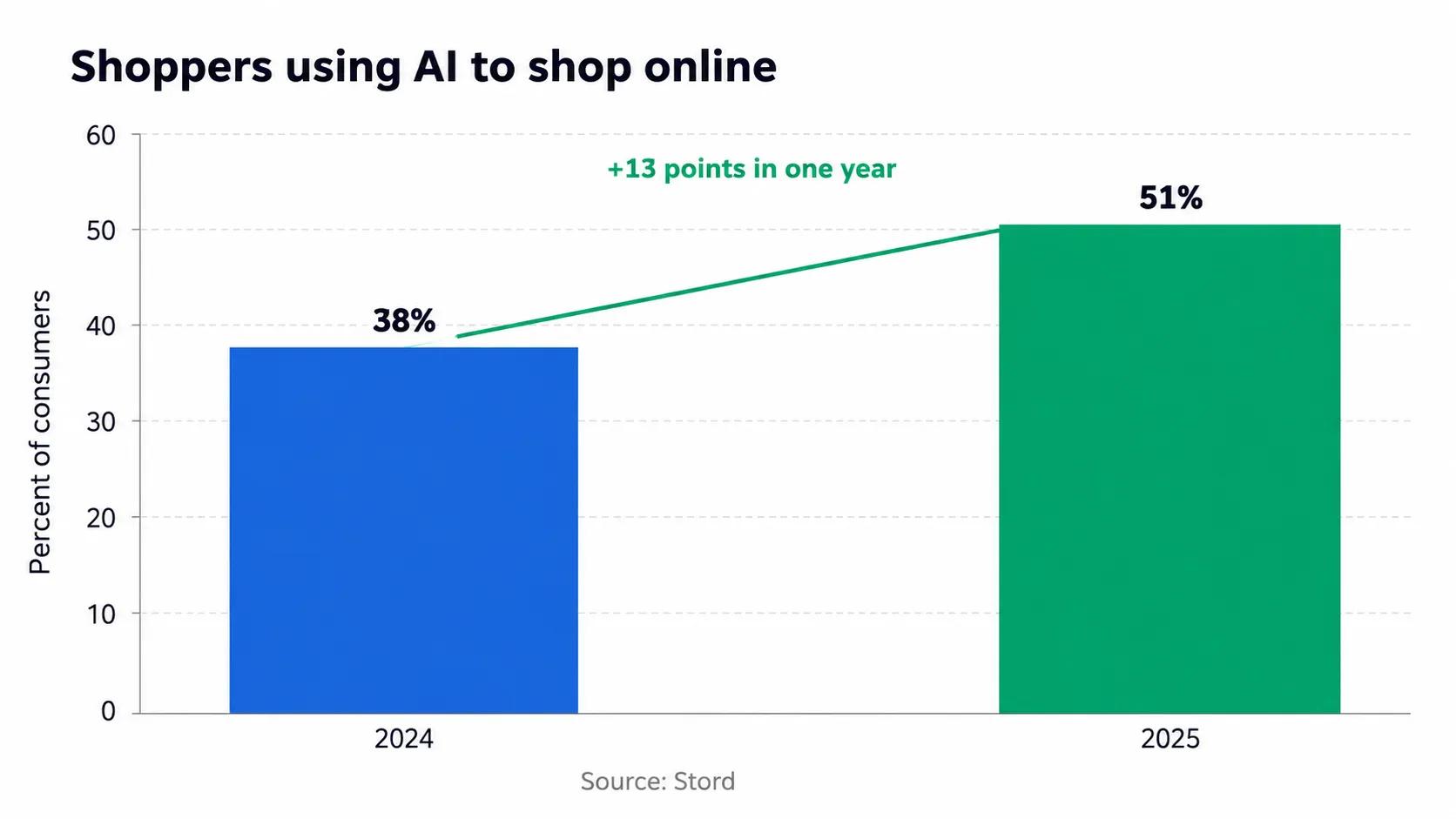
The next wave is already forming. Agentic ai in e-commerce is moving from helper to operator. Soon agents will adjust pricing and restock and route orders with light human review. Stord found that consumer use of generative AI for shopping rose from 38 percent in 2024 to 51 percent in 2025. Buyers are getting comfortable fast.
For a small shop this means survival gets cheaper. You no longer need a big team to reply at scale. One owner with the right agent can serve buyers like a brand ten times the size. Sharpen your sales closing techniques and let the agent handle the volume while you handle the judgment. That blend is where small stores win in the next two years.
Final Thoughts On Top AI Agents For E-Commerce
AI agents for e-commerce are no longer a maybe. They reply in seconds. They recover carts. They free your team for the work that needs a human. The data backs it and the buyers already expect it.
But the win is never the agent alone. It is the setup around it. Plan the handoff. Widen the memory. Roll out in phases and keep a person on standby. Do that and the agent stops being a gimmick and starts being your hardest working teammate. Start with one job. Track it. Then grow from there.