
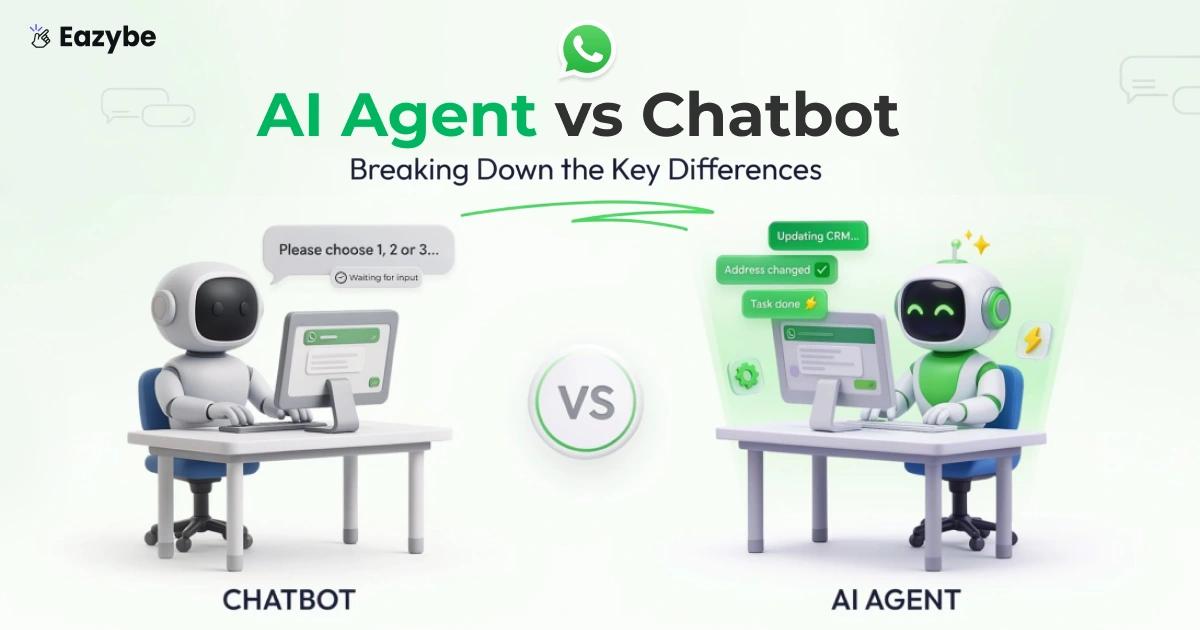


AI Agent vs Chatbot comes down to one thing - a chatbot just answers questions and follows a set script while an AI agent thinks plans and finishes full tasks on its own using other tools without your help. A chatbot simply responds to messages.
An AI agent can greet leads, qualify prospects, update your CRM, assign chats, and automate workflows with little or no human effort. In this blog, we'll explain the key differences between AI agents and chatbots and show how Eazybe - WhatsApp AI agents help teams save time and close more deals.
AI Agent vs Chatbot: The Core Difference That Actually Matters
A chatbot reacts. An AI agent acts. That single line holds the whole idea.
A chatbot is a software tool build to chat with a user by following a set script or simple rule. It answers common questions and guides people through fixed steps and replies based on what it was trained to handle. It talks and that is where it ends.
An AI agent is a smarter system that works on its own. It takes a goal thinks through the steps, and uses other tools to finish the full task without your help. It does not just reply. It actually does things. This is the heart of the chatbots vs ai agents question.
Why Action Is The Real AI Agent vs Chatbot Divide
The key word here is action. For a chatbot, a reply is the finish line. For an agent, a reply is just one step in a longer task. An agent can pull up a record, check stock book a slot and update your CRM on its own. A chatbot only puts text back on the screen and waits for the next prompt.
So this is not about which one sounds smarter. It is about which one can finish the job.
| Point | Chatbot | AI Agent |
|---|---|---|
| Mode | Reacts | Acts |
| Output | A reply | A finished task |
| Memory | Little or none | Short and long term |
| Tools | Rare | Uses apps and APIs |
| Best for | Simple questions | Multi step goals |
That table is the short version of any agentic ai vs traditional chatbots comparison, and it is the fastest way to see the gap at a glance.
AI Agent vs Chatbot: How A Chatbot Really Works Behind The Scenes
There are two kinds of chatbots, and knowing both makes the AI Agent vs Chatbot gap easier to see.
- Rule based bots: These follow a fixed script. You build a set path of questions and answers. The moment a user steps off that path, the bot breaks. It is cheap and predictable, but also stiff.
- LLM bots: This is the middle one that confuses people. It uses a language model to sound natural, answers open questions, and rephrases well. It feels smart. But it still only talks. It holds no real tools. This is the trap in the ai chatbot vs ai agent debate. A smart talking bot is still just a bot.
The limit is built in. A chatbot stays inside the chat box. It cannot reach into your pipeline and move a deal forward. For a fast quick reply or a simple FAQ, that is perfectly fine. For real work, it falls short.
How An AI Agent Actually Gets Work Done in the AI Agent vs Chatbot Comparison
An AI agent runs a loop. It reads the goal, plans the steps, picks a tool, acts, and checks the result. Then it repeats until the job is done.
That loop is what people mean by agentic ai vs chatbot. The agent thinks across steps, while a chatbot answers one line at a time.
Tools are the engine. The agent connects to live systems. It can pull a contact, send a message, or read an image a buyer just shared. Memory lets it recall the last chat so it never asks the same thing twice. This is the layer behind AI sales agents and the WhatsApp copilot that writes replies for reps.
Five Things That Define the AI Agent vs Chatbot Gap
- Understanding: It reads intent, not just keywords. A refund request and a refund policy question take different paths.
- Action: It uses tools and changes records. This is the line that splits ai agents vs ai chatbots.
- Memory: It holds context now and history later, so chats feel smooth. Solid cloud backup keeps that history safe.
- Reasoning: It breaks a big goal into small steps in a smart order.
- Learning: It gets better over time from past chats and feedback.
Picking Between AI Agent vs Chatbot for Your Workflow
Choose by the task, not the hype. The honest answer to chatbot vs agentic ai is short. Use a chatbot for small fixed jobs. Use an agent for messy work that crosses steps.
Use a chatbot when the scope is tight. Think FAQs, office hours, or a simple booking link. Low risk, low stakes.
Use an agent when the work spans days and tools. Think lead qualification, order tracking, and follow up over time.
A quick way to see the upside of each:
- Chatbot wins on speed and cost: It is fast to set up, cheap to run, and great for repeat questions that never change.
- Chatbot keeps things predictable: You always know what it will say, which is handy for compliance and fixed flows.
- Agent wins on real outcomes: It does not just answer, it qualifies, updates, and moves with WhatsApp copilot deal forward.
- Agent saves your team hours: It handles the busy work across tools so reps focus on closing.
- Agent scales without breaking: It manages a flood of chats at any hour without extra headcount.
Another pattern keeps showing up. Teams want the agent to qualify a lead and then hand it to a person to close with so reps can use real sales closing techniques at the right moment.
One agency asked us to tag each lead as hot or warm or cold and send it straight to their reps. The agent sorts. The human closes. The handoff is the whole point. A shared team inbox and a clear WhatsApp team inbox make this clean.
AI Agent vs Chatbot: The Benefits of Each One
Neither one wins across the board. Each has a place, and the smart move is knowing what each does best before you pick a side in the AI Agent vs Chatbot call.
Chatbot benefits
- Fast and cheap to run: Quick to set up and light on cost, great for simple repeat questions.
- Predictable every time: You always know what it will say, which helps with fixed flows and compliance.
- Easy for users: Simple menus and quick replies that need no training at all.
- Light on resources: It runs without heavy data or deep integrations behind it.
AI agent benefits
- Finishes real tasks: It does not just answer, it qualifies, updates records, and moves the deal forward.
- Saves hours of busy work: It handles steps across tools so reps spend time closing, not typing.
- Scales without breaking: It manages a flood of chats at any hour with no extra headcount.
- Gets smarter over time: It learns from past chats and keeps improving with every conversation.
The takeaway is simple. A chatbot is the right pick when the job is small and fixed. An AI agent earns its place the moment the work turns into a real multi step task.
What the Sales Data Says About AI Agent vs Chatbot
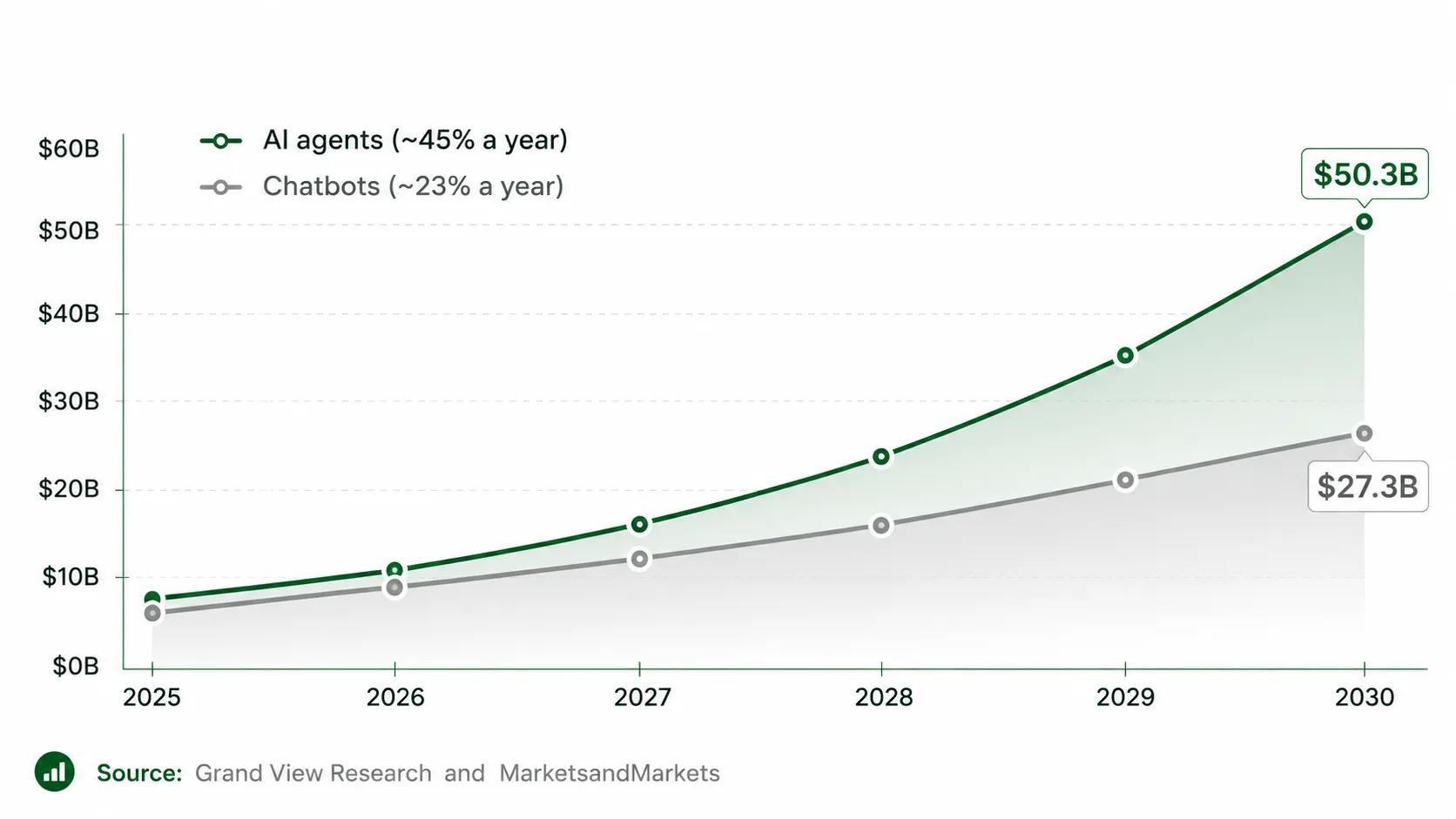
Note: AI agents are growing nearly twice as fast as chatbots.(Source: Salesforce State of Sales 2026 via Futurum Group, McKinsey via Master of Code)
The shift is real, and the numbers back it. Salesforce reports that 87% of sales teams now use AI, and 54% already use AI agents for deeper automation. The payoff shows up in time too, with reps using AI tools saving around twelve hours a week on prospecting, drafting, and CRM updates.
The money side holds up as well. McKinsey finds that firms using agentic AI report 3 to 15 percent revenue growth and a 10 to 20 percent lift in sales ROI. So this is not just about faster replies. It is about real revenue moving in the right direction.
Now the real cases we hear on calls.
- Funnel tracking: The agent moves a buyer through a WhatsApp sales funnel, and you watch each stage through WhatsApp sales performance analytics.
- The founder is buried in chats: One founder handled 150 inquiries a day alone. Manual follow up meant missed leads and lost sales. An agent catches every chat at any hour and sorts it before he is even awake.
- Field teams on WhatsApp: The agent logs each chat and updates the record so reps stop typing notes by hand. That lifts sales efficiency right away.
The same gains show up in service, which is why many teams also use AI agents for customer support.
AI Agent vs Chatbot Implementation What You Need To Set Up First
An AI agent needs more groundwork than a chatbot. A bot can go live in minutes, but an agent only works well when the base is right. Before you launch, sort out these four things.
- Clean data: The agent reads your CRM, so messy records lead to messy answers.
- A connected stack: The agent needs API access to your CRM and WhatsApp to act.
- Clear permissions: Decide what the agent can change on its own and what stays human only.
- A WhatsApp Business account: This lets you message at scale without running into blocks with WhatsApp sales performance analytics.
This is exactly where a simple AI agents vs chatbots platform choice tends to stall, on data and access rather than the AI itself. The same holds for any agentic ai platforms vs traditional chatbot builders call. Builders are easy to start, but agents need a real foundation under them. Tools like HubSpot WhatsApp integration and steady WhatsApp chat sync clear away most of the early friction.
Where Integration Gets Tricky in AI Agent vs Chatbot
Connecting an agent takes more time than people expect. API links have to hold. Fields have to map cleanly between systems. Two way sync needs real testing, so a change in WhatsApp shows up in the CRM and flows back without gaps. Most teams assume this is instant. It is not. Plan for days to a few weeks. The WhatsApp coexistence feature eases a lot of this, since a team can automate on a number while staff still use it for personal chats.
AI Agent vs Chatbot: The Cons Of Each One
No tool is perfect. Both sides come with trade offs, and knowing them upfront saves you from a bad pick. So before you settle the AI Agent vs Chatbot call, weigh the downsides too.
Chatbot cons:
- Breaks off script: The moment a user asks something outside the flow, it stalls or gives a wrong answer.
- No real action: It can talk, but it cannot finish a task or update your systems.
- Frustrates users fast: Stiff replies and dead ends push people to ask for a human.
- Limited growth. It handles simple jobs but cannot scale into complex work.
AI agent cons:
- Costs more to run: It uses AI credits and tools, so heavy volume adds up.
- Needs a solid setup: Clean data, API access, and permissions all have to be in place first.
- Harder to predict: More freedom means you need guardrails and human checkpoints.
- Takes time to tune: It performs best after some training on your own data and flows.
The takeaway is simple. A chatbot can feel limited once needs grow, while an agent asks for more setup and care to run it right. Match the choice to the job and the resources you actually have.
How Eazybe AI Agents Fit Into The AI Agent vs Chatbot Choice
Once you have weighed both sides, the next question is simple. Where do you actually run an agent that fits a sales team? This is the gap Eazybe AI agents are built to fill.
Eazybe AI agents live right inside WhatsApp and your CRM, so they work where your buyers already chat. They do not just reply. They read the message, qualify the lead, sort it as hot or warm or cold, and update the record on their own. The warm ones get passed to a real person at the right moment, so your reps spend their time closing instead of typing notes.
Here is what they handle day to day:
- Lead qualification: Every new chat gets read and sorted, even at 2am, so no lead sits cold.
- CRM sync: Each conversation logs itself into your CRM, so records stay clean without manual work.
- Smart handoff: The agent does the early sorting, then hands the buyer to a human to close the deal.
- Round the clock cover: It answers the first message in seconds at any hour, so speed never drops.
The best part is that you do not have to choose one path forever. You can start small, let the agent own a single job with top WhatsApp automation tools like first reply or qualification, and grow from there. It pairs the structure of a bot with the reasoning of an agent, which is exactly the mix most sales teams actually want.
AI Agent vs Chatbot In Ecommerce And Marketing
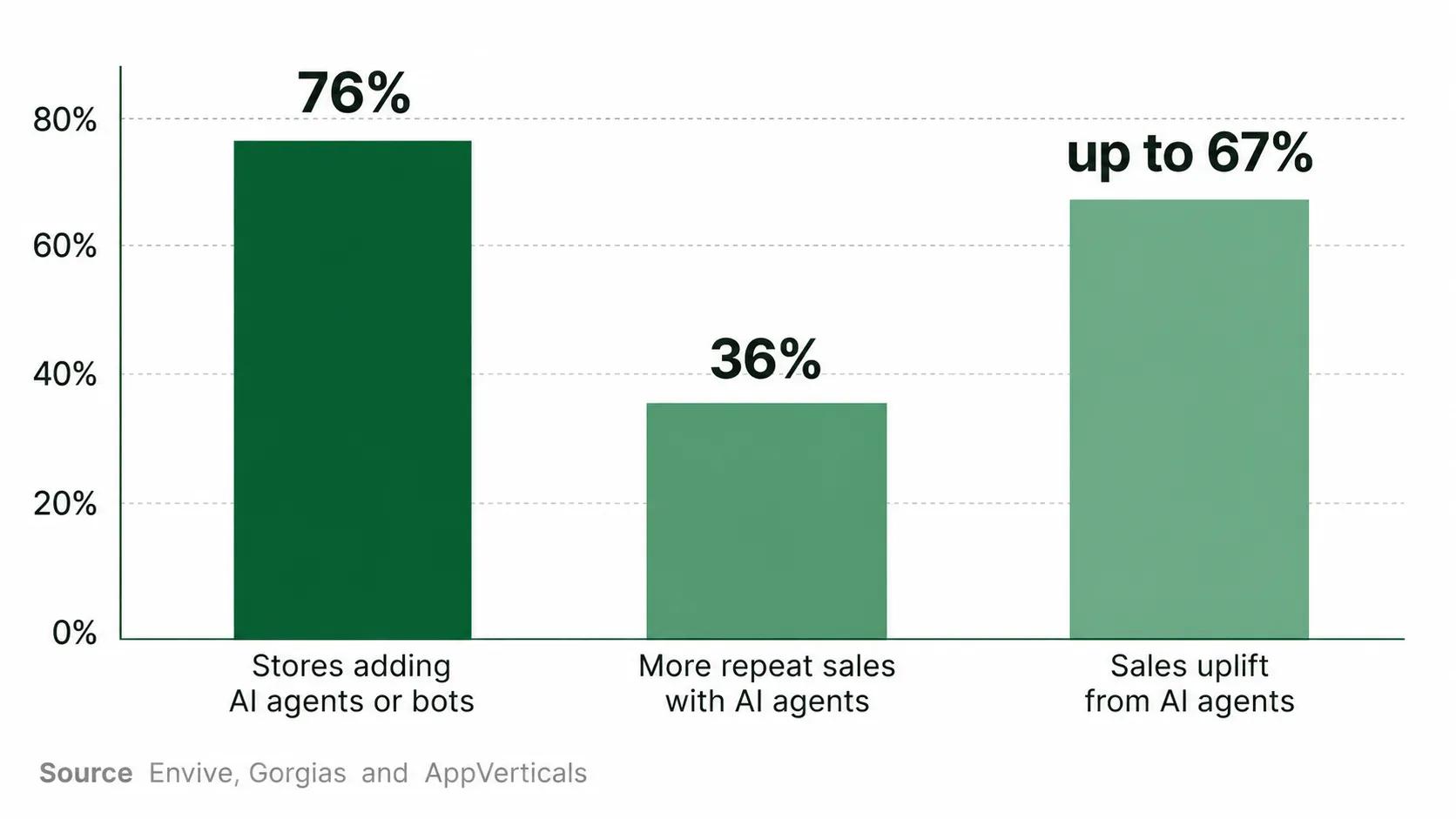
Note: AI agents drive up to 67% sales uplift in ecommerce.(Source: Envive AI sales agent statistics)
For an online store, the win is speed. A shopper asks about stock at 2am. A chatbot sends a plain link. An agent checks the catalog, shares the exact item, and nudges them to buy. Around 76% of online retailers have added bots or plan to. Agents just take it further and act.
For marketing, the agent owns the top of the funnel. It replies to a Meta ad lead in seconds, and that first reply often decides who buys. It never sleeps, so no lead goes cold at night. This is where good AI agents vs chatbots solutions pay off. Pair it with the right WhatsApp business tools and compare options in this list.
AI Agent vs Chatbot: The Smart Way To Make The Switch
You do not rip out a working bot overnight. The smart way to handle the AI Agent vs Chatbot shift is in steps, so nothing breaks while you upgrade.
- Start small: Let the agent own one job first, like the first reply or lead qualification. Keep the rest as it is.
- Run both side by side: Let the chatbot handle the known fixed flows while the agent learns the messier ones. This coexistence keeps service steady during the switch.
- Watch the numbers: Track reply time and conversion before you widen the scope. Let the data tell you when to expand.
- Upgrade when it earns it: Rebuild only the flows that truly need action. Leave the simple ones on the bot if they already work.
The key is knowing when to upgrade and when to rebuild. If a flow just answers questions, leave it on the chatbot. If a flow needs to qualify, update, or act across tools, that is where the agent takes over.
This phased path keeps risk low and your team calm. A simple scheduler and tighter sales enablement make the move smoother, so you grow into agents at your own pace instead of betting it all at once.
The Future Of AI Agent vs Chatbot For Sales Teams
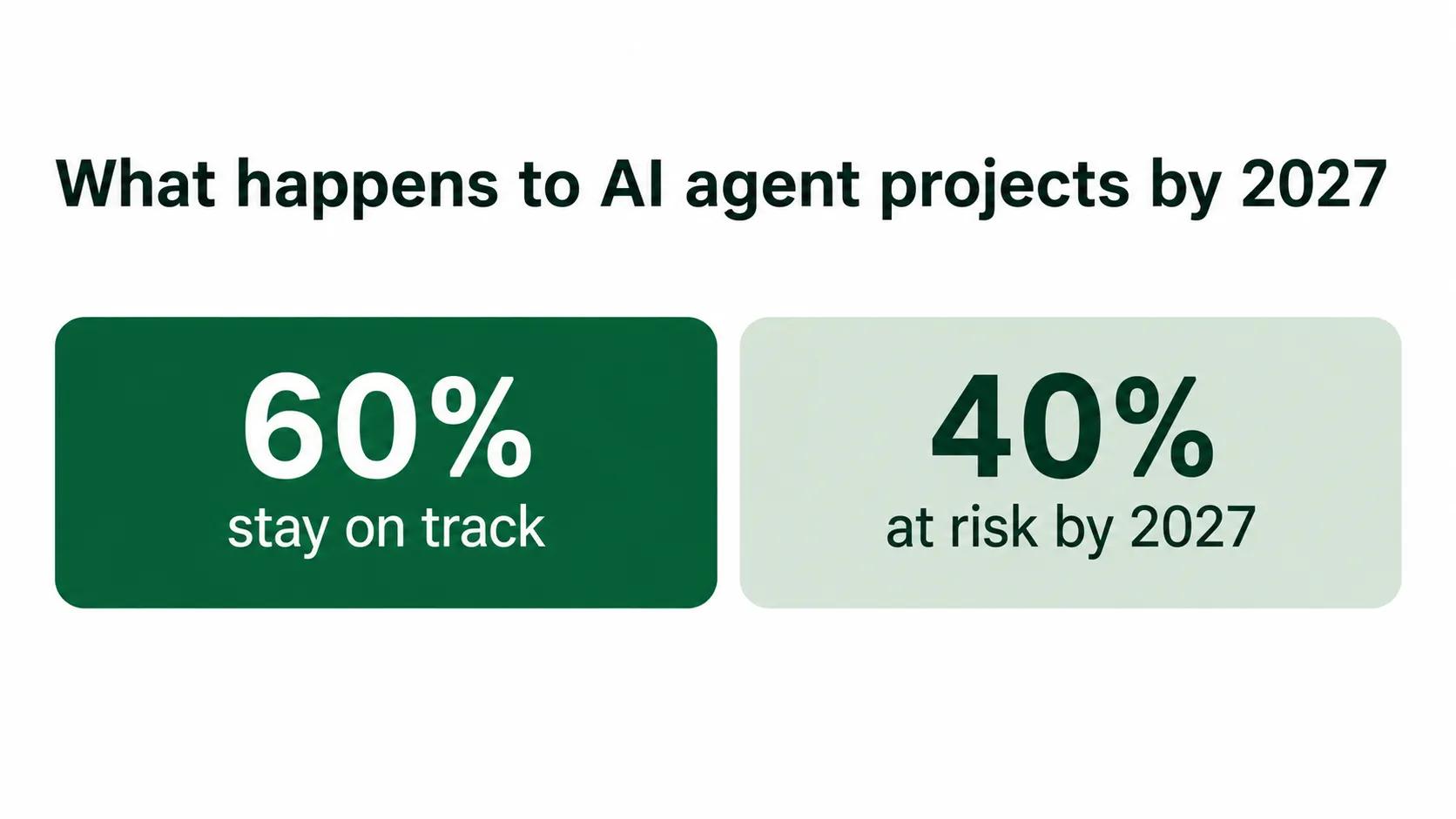
Note: Not every AI agent project succeeds. (Source: Gartner via Paul Okhrem)
The direction is clear. Agents will take over more of the routine funnel, so reps spend their time on real conversations instead of busy work.
Be honest about the risk too. Gartner warns that over 40% of agentic AI projects may be dropped by 2027 when cost and control are ignored. So the winners will not chase autonomy just for show. They will run focused agents with clear human checkpoints, where the agent does the heavy lifting and people stay in charge of the calls that matter.
Expect agents to spread into more fields as well. Eazybe already builds AI agents for healthcare and AI agents for insurance, where fast and correct replies matter most. The AI agents vs chatbots differences 2026 story is not about replacing people. It is about freeing them to sell.
Final Thoughts On AI Agent vs Chatbot
The AI Agent vs Chatbot choice is not about which one is better. It is about what the job needs. A chatbot works for small fixed tasks. An AI agent fits when the work gets bigger and crosses steps and tools.
For most sales teams, the best answer is both. Let the bot handle the simple stuff and let the agent do the heavy work, like qualifying leads and syncing chats. Start small. Watch the results. Then grow.
The smart move is to keep people in charge of the calls that matter. If you want that mix without the hard setup, Eazybe AI agents bring it together right inside WhatsApp and your CRM.