
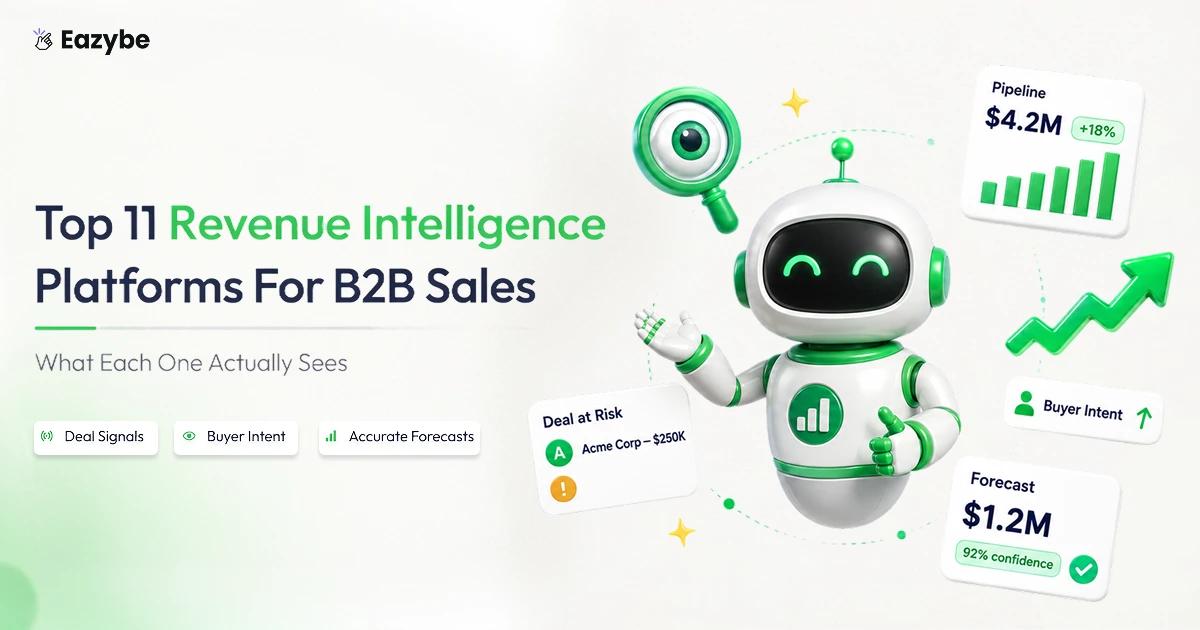


Top revenue intelligence platforms for B2B sales predict which deals will close by reading your email, calls and meetings alongside. Whatever is already in your CRM. Every vendor explains that much. What none of them put on the page is that a tool can only score the channels it is plugged into. So, two platforms with nearly the same feature list will hand you two different forecasts on the same pipeline.
Eazybe - WhatsApp AI Agents is the only one on this list. That reads WhatsApp and it does more than store the chat. It scores each deal on how the conversation is going. And writes that score into HubSpot or Salesforce or Zoho. So, a buyer who has gone quiet turns up as a risk on the record. In this blog, we explain the top 11 revenue intelligence platforms for B2B sales and what each one can actually see.
What A Revenue Intelligence Platform Actually Does
A revenue intelligence platform sits above your CRM and works out which deals will actually close. It reads your CRM records along with email and calls and meetings then scores each open deal against the ones you have already won.
It does four jobs:
- Collects: every email and call and meeting on its own so reps do not log anything.
- Reads: those activities and turns them into data it can work with.
- Scores: each deal against the pattern of deals that closed before.
- Acts: by flagging risk on the deal record or firing an alert.
A CRM report only counts what a rep typed in and it looks backwards. Revenue intelligence looks at what really happened and looks forward. Your pipeline can show a deal in negotiation for nineteen days and still look healthy even though the buyer stopped replying on day four.
Reading the chat instead of the log is what people mean by WhatsApp sales intelligence and most teams skip it when they shop for one of these tools.
The catch is simple. A platform can only score what it collected and it only collects from what it is plugged into. Plug one into Gmail and a dialer and it reads your email and calls properly but it will never know your best rep spent forty minutes on WhatsApp voice notes with the buyer on Tuesday.
Revenue Intelligence Against Conversation Intelligence And Sales Intelligence
Three terms get used as if they mean the same thing and they do not:
- Sales intelligence: is outside data on companies and buyers and tells you who to chase before a deal exists.
- Conversation intelligence: records calls and pulls out objections and coaching moments.
- Revenue intelligence: takes both plus your CRM activity and turns it into deal scores and a forecast.
Conversation intelligence sits inside revenue intelligence rather than beside it. Several platforms below started as call recorders and added forecasting later which is why they need call volume before they can say anything useful.
So, ask one question in every demo. If a deal has had no calls this quarter can you still score it.
Plenty of B2B deals now run entirely on messages and a call recorder scores those at zero. Eazybe reads reply times and message patterns instead so a deal that never had a single call still gets a health score in WhatsApp sales tracking terms and still shows up as at risk inside your CRM.
Top Revenue Intelligence Platforms Compared
Every platform below forecasts well on the channels it plugs into so the real question is which channels those are. Only three of them publish a price and the rest need a sales call before you learn anything.
| Platform | Best for | What it reads | AI agents | Writes into |
|---|---|---|---|---|
| 1. Eazybe | Teams closing on WhatsApp | WhatsApp reply times message frequency and engagement trends | Lead qualifying sales customer success RevOps unreplied chats and ads agents plus a builder for custom ones | HubSpot, Salesforce, Zoho, Pipedrive, Bitrix24, LeadSquared, Freshworks, Sheets and webhooks |
| 2. Gong | Call coaching depth | Calls email and meetings | Not verified | Major CRMs |
| 3. 6sense | Deciding which accounts to chase | Buying intent and account signals rather than your deals | RevvyAI and AI email agents | Major CRMs plus API and MCP |
| 4. Demandbase | Account targeting with advertising attached | Account identification intent and ad engagement | Not verified | Salesforce HubSpot and Dynamics |
| 5. HockeyStack | Tying marketing spend to pipeline | Marketing sales and product touchpoints | Not verified | Reporting layer rather than deal records |
| 6. Dreamdata | B2B SaaS attribution | Buyer journey across channels | Not verified | Reporting layer rather than deal records |
| 7. Mediafly Revenue360 | Sales analytics and board reporting | CRM data plus captured activity | Not verified | Salesforce and HubSpot |
| 8. Backstory formerly People.ai | Enterprise leaders who own the number | Email meetings calls and chat across several CRMs at once | AI answers delivered inside the CRM plus MCP | Salesforce Dynamics and Oracle |
| 9. Avoma | Mid market teams wanting a price without a sales call | Meetings calls and email | Ask Avoma plus MCP | Salesforce HubSpot Pipedrive and Zoho |
| 10. Aviso AI | Enterprise forecasting with an AI assistant | CRM activity and calls | MIKI assistant | Major CRMs |
| 11. Revenue Grid | Salesforce shops fixing CRM hygiene | Email and calendar activity | Not verified | Salesforce only |
1. Eazybe: Revenue Intelligence For Teams Selling On WhatsApp
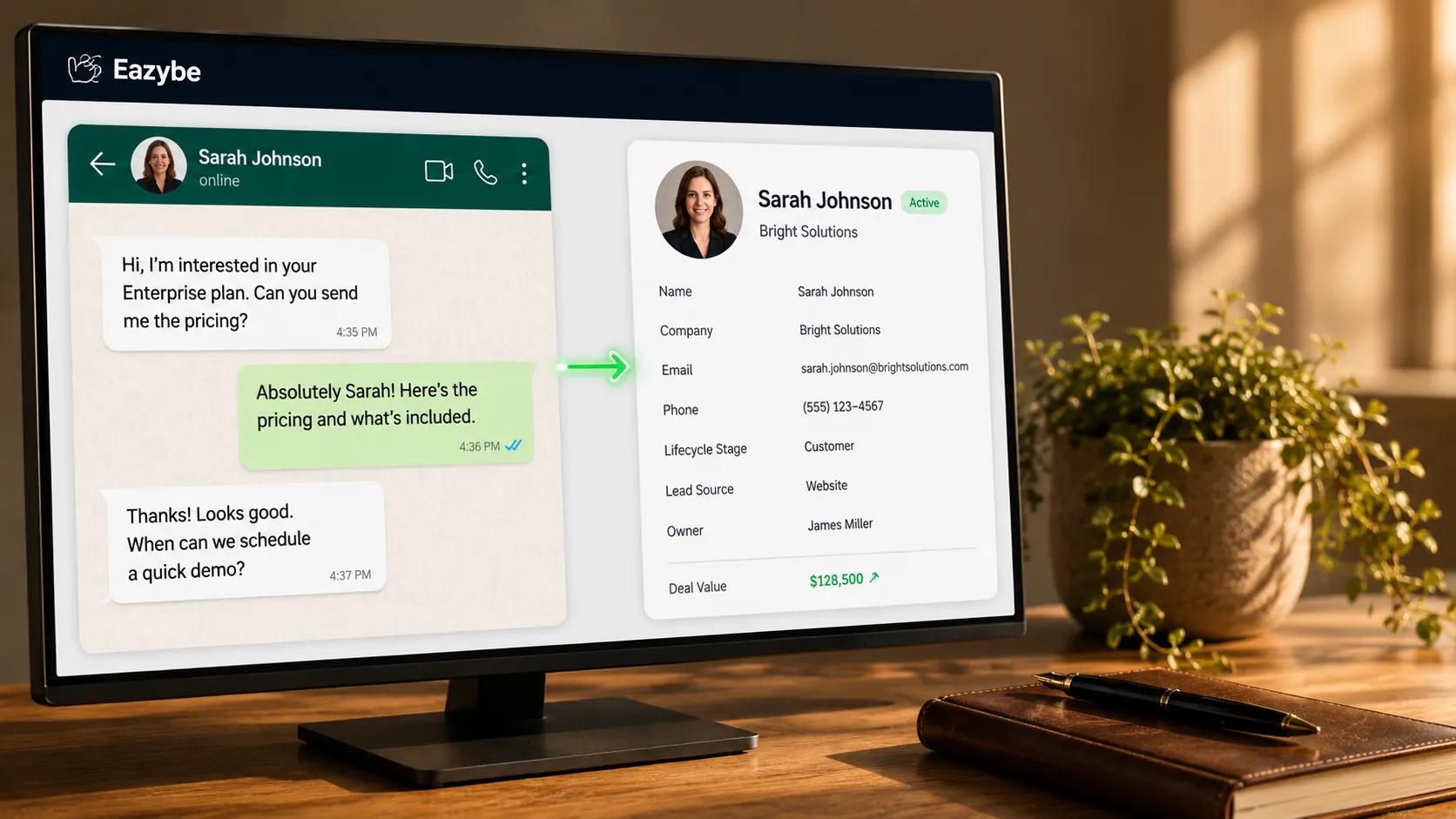
Eazybe turns WhatsApp conversations into contact records and deal data.
Best for: B2B and B2C both teams of twenty to a hundred reps on HubSpot or Salesforce or Zoho where a good share of deals move over WhatsApp.
Every other platform here builds its forecast from email and calls. Eazybe builds from the messages and that is usually the part your forecast is missing.
Revenue Inbox scores each open deal on how the conversation is actually going rather than the stage a rep picked. It reads reply times and message frequency and whether engagement is climbing or falling then flags the deals going quiet while there is still quarter left to save them.
Turning chat activity into numbers a manager can act on is the same idea behind WhatsApp sales performance analytics applied at the deal level rather than the team level.
Key features:
- Deal health scoring: worked out from reply times and message frequency and engagement trend on every open deal.
- Stalled deal alerts: on thresholds you set such as days without a response or a drop in engagement.
- CRM reality check: that puts your pipeline next to real conversation health so you find the dead deals before the forecast call and not after.
- Health scores sync: into HubSpot and Salesforce and Zoho.
- Intent scoring: on every message using BANT or MEDDIC or a framework you write yourself.
- Revenue Agent: that reads WhatsApp and the CRM every night then flags ghosted deals and sends a weekly executive brief.
- Captures on any number: including personal and Business app and API so nobody has to move lines before the data starts flowing.
How deep the sync goes depends on which CRM you run and the differences are covered in these WhatsApp crm integrations.
None of this sits in a separate dashboard because it lands in the CRM as real records through WhatsApp chat sync.
Setup and price: Four tiers with a four day trial and no card. Salesforce comes in on the Scaler tier and the agents on the AI tiers. Setup is a Chrome extension install rather than a rollout project.
Who should look elsewhere: If your deals run on calls and email with almost no messaging then a call recorder will do more for you. Eazybe scores deal health rather than producing a full forecast roll up so a large org reporting to a board will still want a forecasting platform underneath it.
2. Gong: The Benchmark For Call Coaching
Gong
Best for: enterprise sales teams of roughly a hundred reps or more where deals are won on calls and coaching is the priority.
Gong is the platform most people picture when they hear revenue intelligence. It records and transcribes every call then reads them for competitor mentions and pricing talk and how your best people handle objections. Managers coach from real calls instead of secondhand accounts and that part does better than anything else here.
The forecasting sits on top of that. Gong Forecast predicts close probability at rep and team and org level with call data behind the numbers while Gong Engage handles outreach by surfacing the next best action on each deal.
Key features:
- Call recording and transcription: across your dialer and video tools with the key moments surfaced.
- Conversation analysis: tracking objections and competitor mentions and pricing talk by deal stage.
- Deal warnings: when engagement drops or a risk signal shows up in a conversation.
- Gong Forecast: for close predictions rolled up from rep to team to org.
- Coaching library: built from real call snippets so new reps learn from what actually closed.
- Win loss analysis: based on what was said rather than what a rep reported afterwards.
Coaching from what genuinely worked rather than from opinion is the strongest idea in the product and it carries across channels too which is where most WhatsApp sales best practices come from.
Setup and price: No published pricing. Deals are usually a platform fee plus a per seat cost on multi year terms and a full rollout takes months rather than weeks.
Who should look elsewhere: Teams under fifty reps regularly find the cost hard to justify. It also needs call volume to work, so if your deals move over messages then Gong reads the small slice that happened on a call and has nothing to score the rest on.
That matters most in the early and middle stages where a WhatsApp sales funnel does its work long before anyone books a call.
All nine verified from their own sites first. Two things worth knowing before you read them.
HockeyStack and Dreamdata are attribution platforms: Both confirmed from their own pages. They tell you which channel created the pipeline. Neither scores an individual deal or tells you whether it will close. I have written them honestly as that rather than dressing them up as forecasting tools.
The weakest link in the set is the HockeyStack one. Say drop it and I will leave that block without a link rather than force it.
3. 6sense: Knowing Which Accounts Are Already Looking
6sense
Best for: teams running account based programmes who need to pick targets before a deal exists.
6sense calls itself a revenue intelligence platform but the job it does sits earlier than everything else here. It reads buying signals across the web to work out which companies are researching your category right now and roughly where they are in that process. That gets your reps into the right accounts sooner.
Its Signalverse layer takes in around a trillion signals a day and the AI predicts a buying stage per account rather than a close date per deal. RevvyAI answers questions in plain language and its email agents draft outreach off the same signals.
Key features:
- Anonymous intent: so you see accounts researching before anyone fills in a form.
- Buying stage prediction: at account level from early research through to active evaluation.
- Account prioritisation: so reps work the companies most likely to buy.
- RevvyAI: for asking questions about accounts and getting an answer back.
- AI email agents: that write and reply grounded in current buyer signals.
- Open access: through API and MCP so the intelligence reaches your other tools.
Pointing effort at the accounts most likely to move is the same principle behind improving sales efficiency at team level.
Setup and price: No published pricing. Enterprise contracts and a rollout that needs someone owning it.
Who should look elsewhere: It will not tell you whether the deal in your commit is real. 6sense finds you the account and something else has to score the conversation once the deal exists.
4. Demandbase: Account Targeting With Advertising Attached
DemandBase
Best for: enterprise marketing and sales teams running coordinated account programmes with real ad budget behind them.
Demandbase One brings account identification and intent and advertising into one place. It matches anonymous website traffic to named companies and then lets you run ads at those accounts through its own demand side platform, which no other platform on this list has built in.
Its Agentbase agents work across campaign outcomes and account engagement and intent, so the reporting side and the buying side sit on the same data.
Key features:
- Account identification: matching anonymous visitors to companies.
- Native B2B advertising: so you can target accounts without a separate ad platform.
- Intent and technographic data: layered onto your account list.
- Website personalisation: that changes what a visiting account sees.
- Sales intelligence: giving reps buying group and contact detail.
- Agentbase agents: covering campaigns and engagement and intent.
How far any of this travels depends on the CRMs a platform reaches, which is worth checking against your own list of WhatsApp crm integrations before you commit.
Setup and price: No published pricing. Budget several months before it runs properly and expect to need someone operating it.
Who should look elsewhere: Small target account lists and teams without dedicated marketing operations. It is also marketing led, so a sales leader chasing forecast accuracy is buying the wrong thing.
5. HockeyStack: Tying Marketing Spend To Pipeline
HockeyStack
Best for: RevOps teams that need to prove which campaigns actually created revenue.
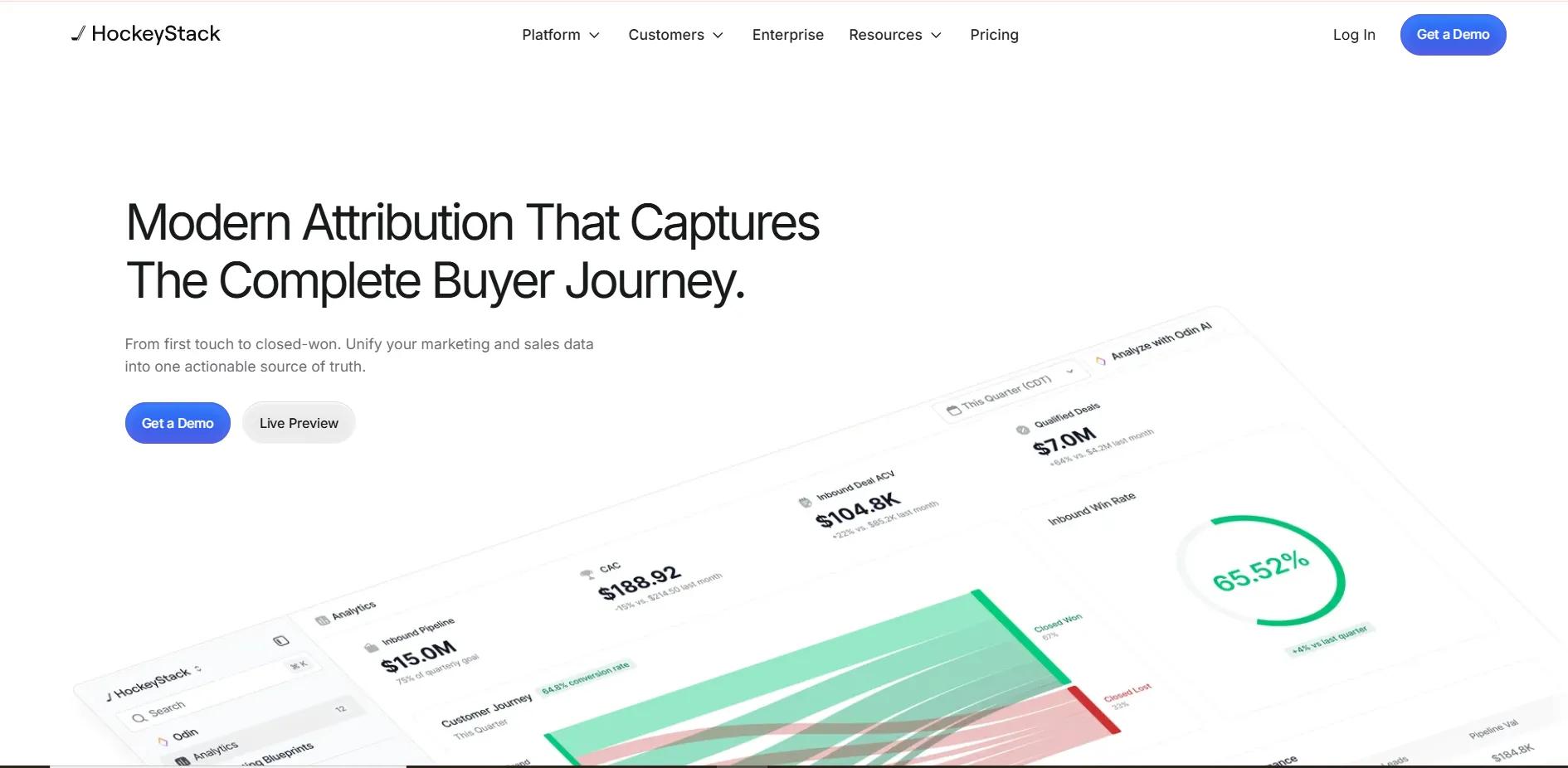
HockeyStack describes itself as a B2B revenue data platform. It pulls marketing and product and sales data into one place and runs multi touch attribution across the whole lifecycle so you can see which touchpoints influenced a deal. It is warehouse native and syncs both ways with your CRM and ad platforms.
The AI layer adds forward looking recommendations rather than just reporting on what already happened.
Key features:
- Multi touch attribution across the full customer lifecycle.
- Account level identity resolution stitching anonymous sessions to named companies.
- Product data included so upsell and churn tie back to real usage.
- Two way sync pushing conversion data back into ads and CRM.
- Governed metrics layer so everyone reports the same numbers.
- AI agents suggesting the next action per segment.
Campaign level measurement matters most where the campaign itself lives which is why teams running WhatsApp broadcast want the same view of what converted.
Setup and price: Quote based with no published figures and an implementation measured in weeks.
Who should look elsewhere: Anyone who came here for deal scoring. HockeyStack explains where the pipeline came from and will not tell you which open deal is about to slip.
6. Dreamdata: Mapping The Whole Buyer Journey
Dreamdata
Best for: B2B SaaS teams that want to understand the path to a closed deal rather than score the deal.
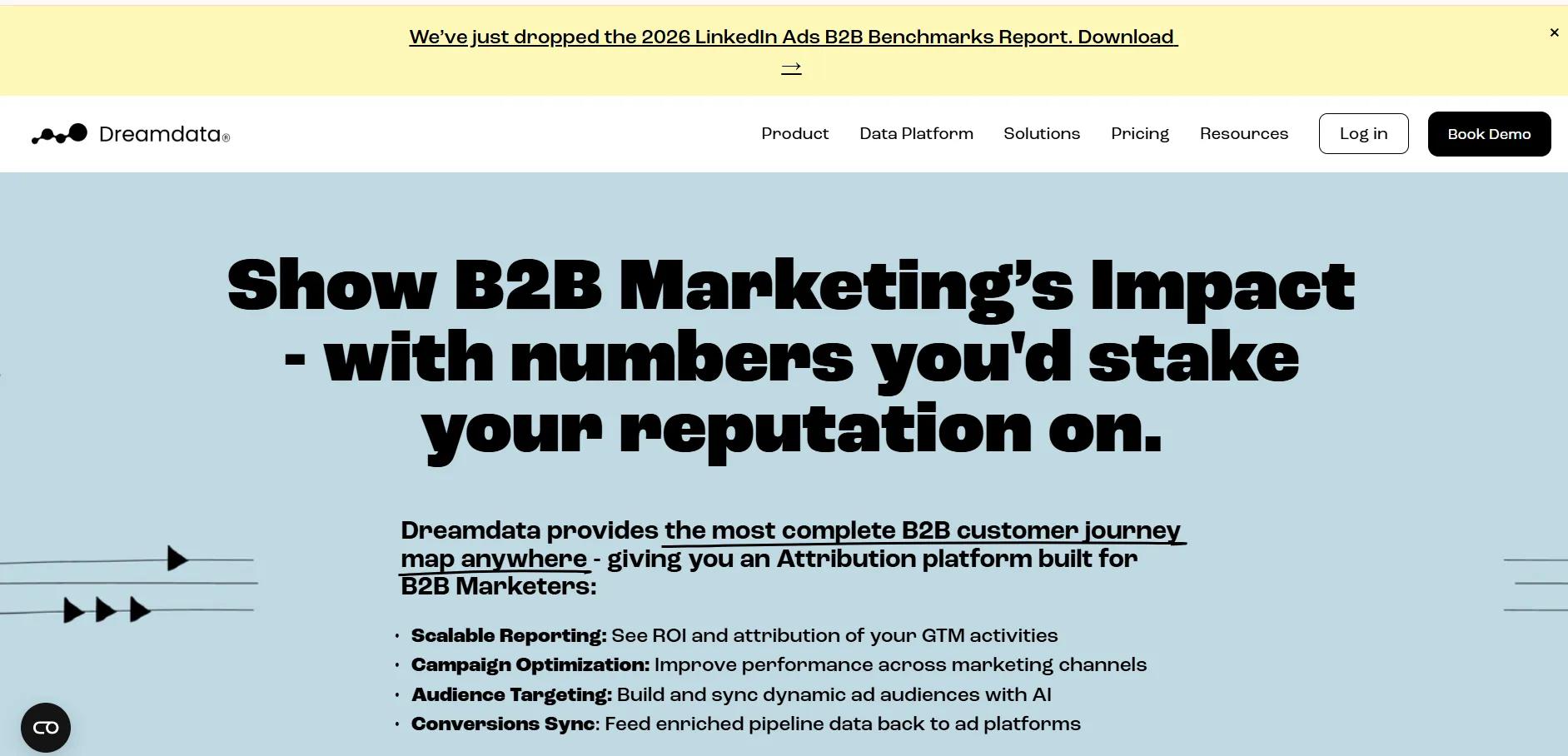
Dreamdata gathers and cleans revenue data then rebuilds each account journey from the first anonymous visit through to closed won. Its identity engine stitches sessions to companies and you can run the same data through ten different attribution models to see how much the answer changes.
Audience Hub then pushes those accounts back out to your ad platforms daily so the insight turns into targeting.
Key features:
- Account level journey timelines showing every touch on a deal.
- Ten attribution models including a data driven model that works out credit rather than following a fixed rule.
- Identity resolution connecting anonymous visitors to known accounts.
- Audience sync feeding in market accounts straight to ad platforms.
- Broad integrations covering ads and marketing automation and support and calling tools.
- Free entry tier so you can look before committing.
Most of a B2B journey stays invisible until it reaches the CRM which is the same reason a full WhatsApp chat backup matters for teams whose conversations happen in chat.
Setup and price: A free tier exists and paid plans are quoted. Setup involves a tracking script and connecting your stack.
Who should look elsewhere: Same caveat as HockeyStack. This is measurement after the fact and not a forecast you can run a quarter on.
7. Mediafly Revenue360: Analytics With Enablement Attached
Mediafly Revenue360
Best for: RevOps and sales leadership teams that want forecasting and reporting alongside content and value selling tools.
Worth clearing something up first. Most roundups still list InsightSquared as its own product. Mediafly completed that acquisition in January 2022 and the standalone InsightSquared analytics product was retired in January 2023. What you buy today is Revenue360 with Intelligence360 inside it.
The analytics heritage is still the strength. Hundreds of prebuilt reports and dashboards on pipeline health and win rates and cycle length without needing a BI team, plus forecast submission that replaces the spreadsheet roll up.
Key features:
- Prebuilt RevOps dashboards that work out of the box on common B2B motions.
- Forecast submission and roll ups replacing manual spreadsheets.
- Activity capture logging email and meetings to the CRM.
- Conversation intelligence included in the wider suite.
- Content engagement data showing what buyers actually opened.
- Salesforce and HubSpot support rather than Salesforce alone.
Team level reporting only works when the underlying activity is captured which is exactly the gap rep radar fills for messaging.
Setup and price: No published pricing and the brand change means you are buying Mediafly rather than InsightSquared.
Who should look elsewhere: Teams that want a focused forecasting tool. The enablement and content side is a large part of what you are paying for.
8. Backstory: Answers Instead Of Dashboards
Backstory
Best for: CROs and VPs of Sales at enterprise scale who own the number and answer for it.
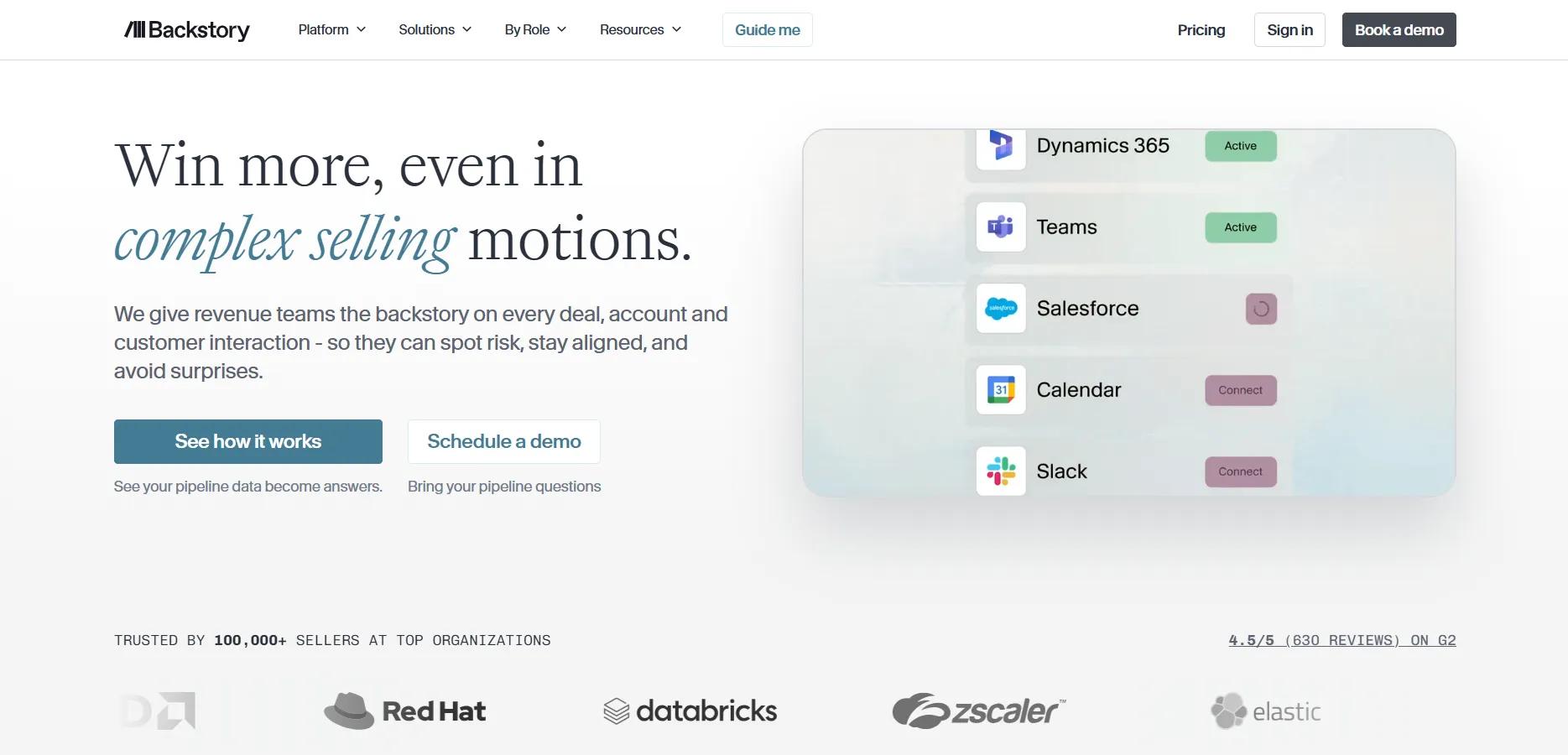
People.ai renamed itself Backstory and their own FAQ confirms it is the same product and the same data infrastructure. Most competing roundups have not caught up.
The pitch is that it gives a direct answer rather than a score to interpret. It captures every email and meeting and call automatically then matches them to the right account and opportunity and names the actual gap, whether that is a missing decision maker or a champion who has gone quiet. It reads two years of your deal history on day one so there is no ramp period.
Key features:
- Automatic capture across email and calendar and meetings with no rep input
- Two years of deal history analysed from the first day.
- Single threading alerts when only one person from the buying side is involved.
- Plain language answers delivered inside Salesforce rather than a separate dashboard.
- Multiple CRMs at once which suits groups running different systems by region.
- Wide connections across Salesforce and Dynamics and Oracle and Gmail and Outlook and Zoom and Teams and Slack.
Backstory publishes customer claims of a fifty percent win rate lift at Red Hat and a seventy six percent drop in manual data entry at AMD. Those are their figures rather than independent ones.
Matching activity to the right deal is the whole battle and it is the same problem a salesforce WhatsApp integration has to solve on the messaging side.
Setup and price: No published pricing. Most teams live in two to four weeks.
Who should look elsewhere: Their own site says it is not a rep productivity tool. Smaller teams without a RevOps function will find it heavier than they need.
9. Avoma: The One That Publishes A Price
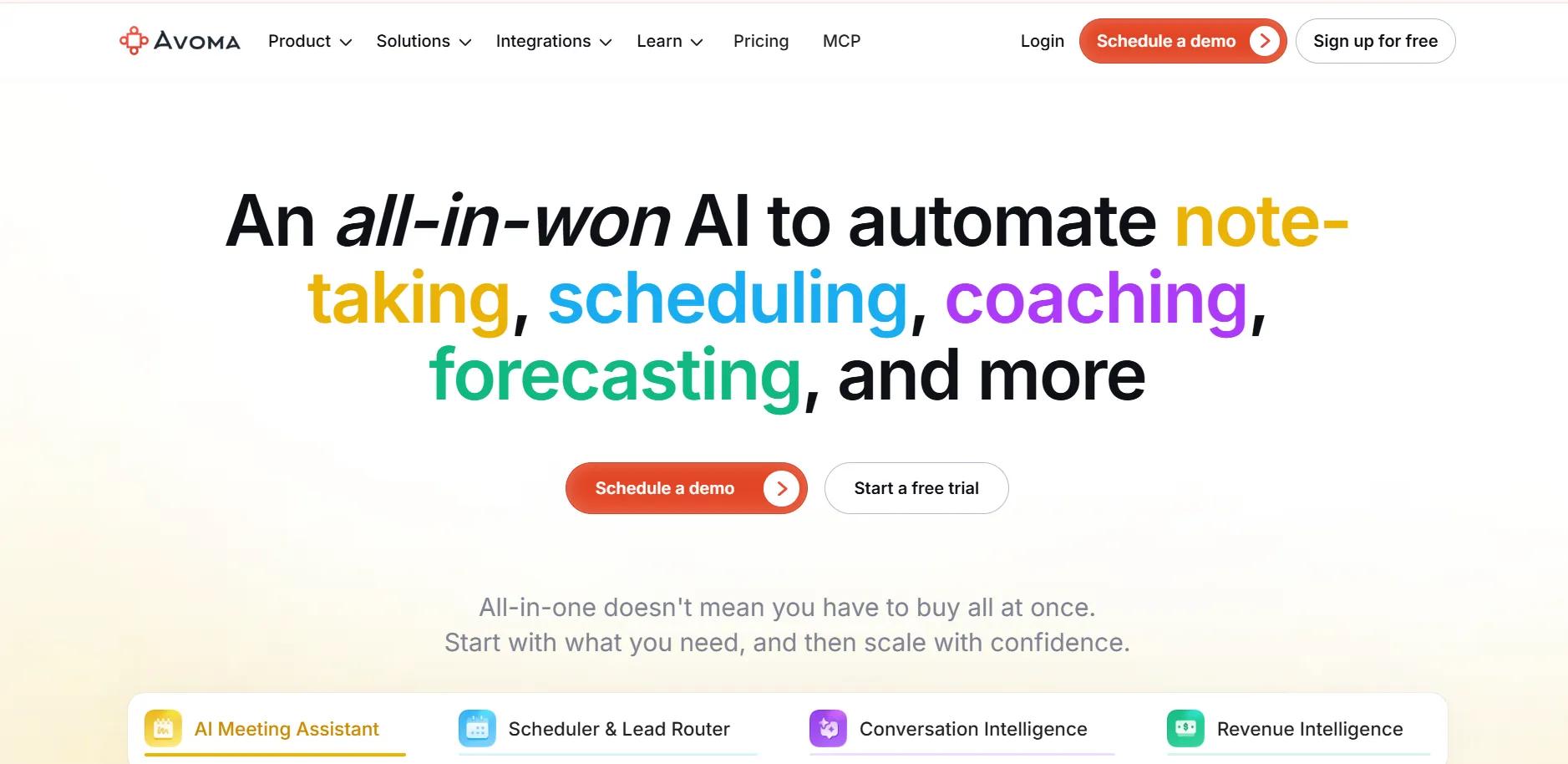
Avoma
Best for: mid market teams who want conversation intelligence and forecasting without a procurement cycle.
Avoma is the only platform here besides Eazybe you can price without talking to anyone. Base plans start at nineteen dollars per user per month and the revenue intelligence add on is twenty nine on annual billing with no platform fee on top.
It started as a meeting assistant and grew into forecasting, so the CRM logging is strong. Notes and action items and objections and stakeholder details sync both ways to Salesforce or HubSpot without a rep touching anything. It also scores calls against MEDDIC or SPICED or Sandler and gives an evidence backed number per deal.
Key features:
- Published per seat pricing and a self serve start.
- Two way CRM sync on Salesforce and HubSpot and Pipedrive and Zoho.
- Methodology scoring across calls and emails with the evidence attached.
- AI forecasting with weighted amounts and custom categories and a submission audit trail.
- Deal risk alerts pushed into Slack from live conversation signals.
- Scheduling and lead routing built in which nothing else here includes.
Meeting scheduling sitting in the same tool is genuinely useful and the equivalent for chat is a WhatsApp scheduler that fires the follow up at the right hour.
Setup and price: From nineteen dollars per user per month with the revenue intelligence add on at twenty nine. G2 rating around 4.6 across more than 1,350 reviews.
Who should look elsewhere: Teams that do not record calls. The scoring is built on conversation data so without recordings most of the value disappears.
10. Aviso AI: Forecasting With An Assistant On Top
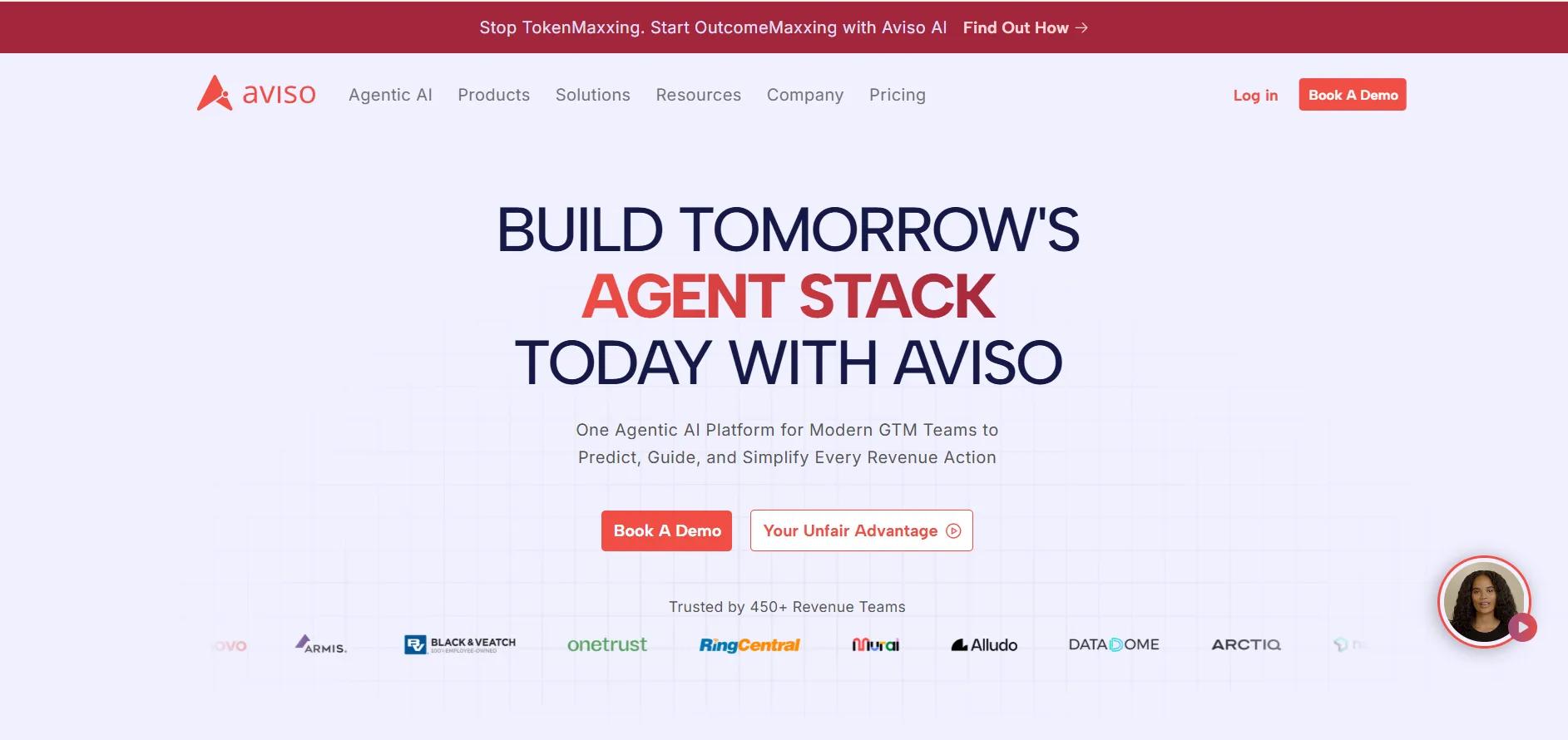
Aviso AI
Best for: enterprise revenue teams with the data and the operations support to run a heavier platform.
Aviso positions itself as a full revenue operating system rather than a point tool. Forecasting and pipeline inspection and conversation intelligence and engagement all sit in one place, and MIKI is the generative assistant you ask questions of instead of building a report.
WinScore is the part worth understanding. Rather than showing a probability and leaving you to trust it, it explains what drove the number. It also handles consumption forecasting which matters if you sell on usage rather than seats.
Key features:
- WinScore with explanations so the prediction shows its reasoning.
- Multi hierarchy roll ups across large and layered sales organisations.
- MIKI assistant for asking questions across deals and accounts.
- Consumption forecasting for usage based pricing models.
- Conversation intelligence included rather than bought separately.
- Collaboration rooms where a deal team works in one place.
Aviso advertises ninety eight percent forecast accuracy. That is their own claim and not an independently tested figure so treat it accordingly.
Assistants and agents get used interchangeably across this whole category and the difference is laid out properly in meta business agent vs whatsapp crm.
Setup and price: No published figures. Their pricing page offers per user plans and white glove onboarding and vendor buyout options which tells you the deal size.
Who should look elsewhere: Mid market teams without dedicated sales operations. The breadth only pays back if someone owns it.
11. Revenue Grid: Clean Salesforce Data
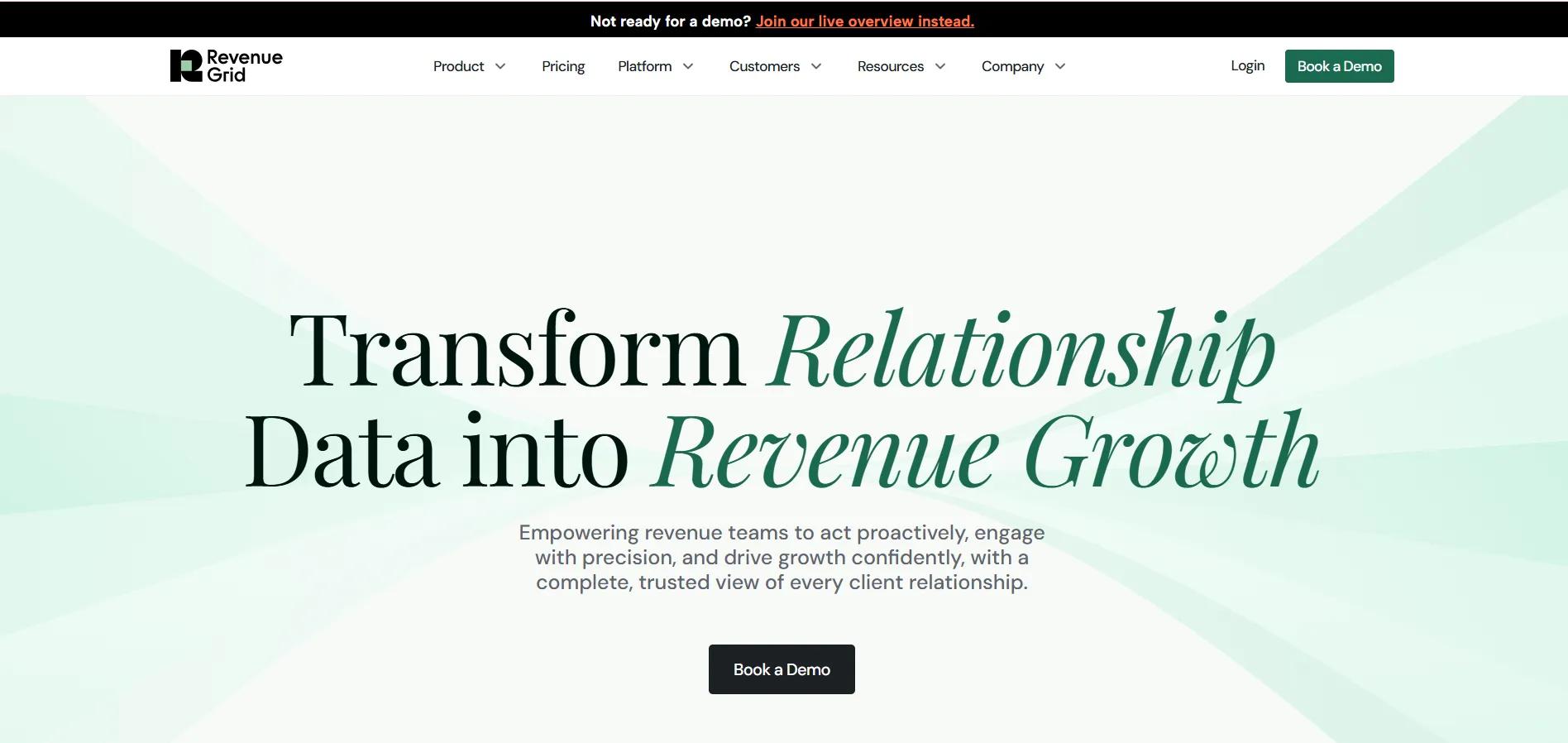
Revenue Grid
Best for: Salesforce shops where the real problem is that nobody logs anything.
Revenue Grid takes the view that pipeline data is unreliable because it depends on reps typing it in, so it captures email and calendar activity automatically and maps it to the right Salesforce records. Its True Pipeline view is built on that captured activity rather than on what reps claimed.
It is also one of only three platforms here that publishes a price, which counts for something in this category.
Key features:
- Automatic activity capture from email and calendar into Salesforce records.
- True Pipeline built on real engagement instead of rep entry.
- Guided selling with next steps tied to stage and account signals.
- Relationship intelligence tracking stakeholder coverage per opportunity.
- Data stays in your Salesforce org which helps if you ever leave.
- Published tiers at thirty and forty nine and one hundred and forty nine dollars per user per month.
Everything sits inside Salesforce which is fine until part of your team runs elsewhere and you need something like a HubSpot WhatsApp integration covering the other half.
Setup and price: Thirty dollars per user for activity capture, forty nine adds AI search and one hundred and forty nine unlocks forecasting and guided selling. Expect admin time in heavily customised orgs.
Who should look elsewhere: Anyone not on Salesforce. Coverage thins out fast on other CRMs and there is no call recorder of its own.
What Revenue Intelligence Platforms Cost And Why Nobody Publishes It
Three of the eleven platforms here show you a price. The other eight want a call first. That is because the deal has parts. A platform fee before you buy a seat, then the per seat cost, then implementation, then a contract that runs two or three years.
Eazybe runs four per seat tiers with a four day trial and no card so you can work out your bill before you speak to anyone.
What the quote leaves out:
- Implementation and training charged once and often five figures.
- Seats nobody uses. Ask what happens when sixty of your hundred licences go quiet.
- The rest of the stack. A call recorder plus a forecasting tool plus enrichment is three costs and not one.
- Admin time, which is a salary even though it never appears on the invoice.
A headline rate hiding the real bill is not unique to this category and the same thing happens with WhatsApp business api pricing.
So, ask what it costs over three years including setup and the tools it does not replace. If a vendor cannot give you a number in the first conversation then you are probably not who they built it for.
The tier by tier breakdown sits on the eazybe pricing page.
How Long A Revenue Intelligence Platform Takes To Set Up
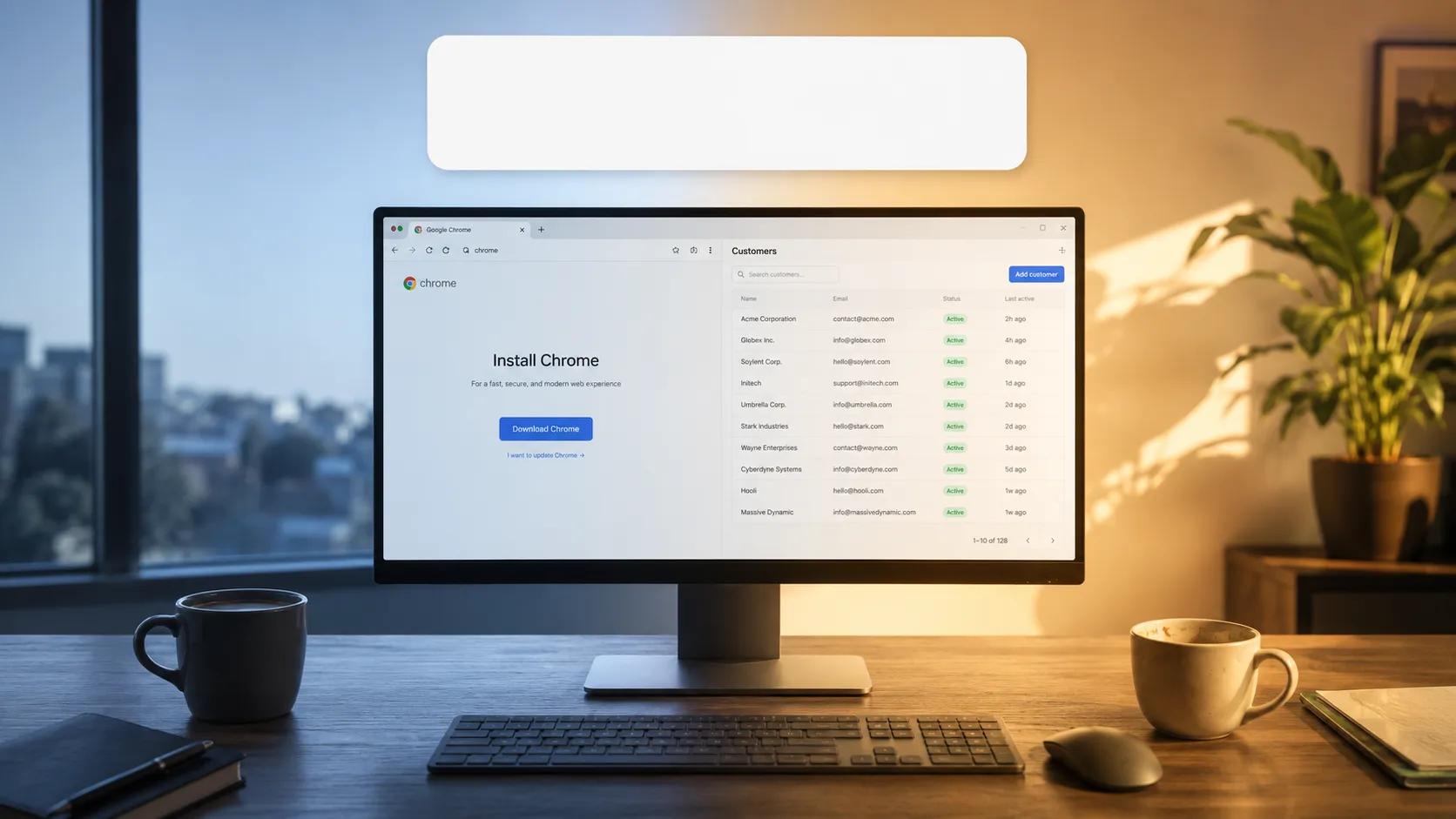
Setup times vary — extension-based tools go live in minutes, not weeks.
Every vendor gives you a go live date. What matters is when you get a report you would act on.
Eazybe is a Chrome extension. Reps install it, keep their own number and deal health scores start landing the same afternoon. Nothing to map and no admin needed. Avoma is self-serve. Backstory quotes two to four weeks. Gong and Demandbase run into months, which is normal for revenue intelligence for enterprise buyers and painful for everyone else.
That is the real split between the best revenue intelligence platforms for mid market B2B teams and the ones built for large orgs. One group installs and starts reading. The other needs a rollout plan and a quarter before it gives you anything.
Eazybe reads from the day you install rather than digging through old chats, so scores are live at once and the response time trends fill in over a few weeks. Having nothing to configure is what buys you that speed.
Reps keeping their existing number is what makes it work and that runs on WhatsApp coexistence.
So, ask one thing in the demo. Not when do we go live but what date do we get a report we would change a decision on.
Revenue Intelligence Platforms That Integrate With Both HubSpot And Salesforce
Most of this category reaches HubSpot and Salesforce and stops. That is fine until part of your business runs somewhere else, because those deals stay invisible:
- Wider reach: Eazybe also covers Zoho, Pipedrive, Bitrix24, LeadSquared and Freshworks plus webhooks, shown on the Zoho WhatsApp integration page.
- Depth beats logo count: Your CRM is full of custom fields and a tool that only writes to its own will never fit properly.
- The demo test: Ask them to write a deal health score to a custom property on your pipeline and show it update on the call.
Anyone who cannot do that is selling you a dashboard.
The Channel Every Revenue Intelligence Platform Misses
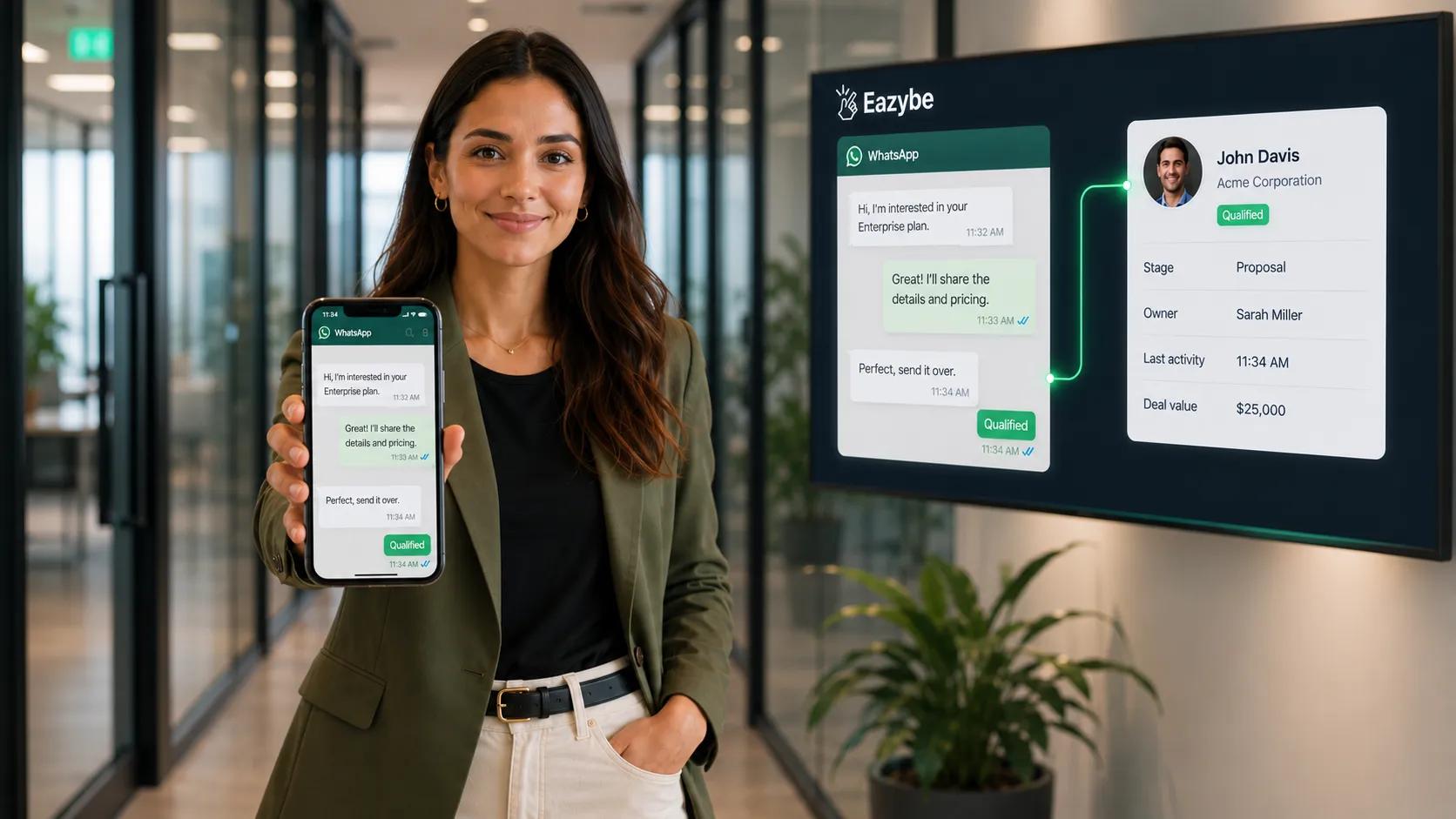
Most revenue intelligence tools read calls and email — not WhatsApp.
Every revenue intelligence platform here was built for a team on email, a dialer and video calls. That covers almost none of B2B sales in India, Brazil, Mexico, the Gulf or Southeast Asia.
There the deal moves on WhatsApp. The quote goes as a document in a chat and the buyer confirms with two words on a Tuesday night. None of it reaches the CRM, so revenue intelligence tools score those deals on whatever email happened to exist. That is how a forecast stays healthy until a rep admits the buyer went quiet a month ago.
Eazybe reads that channel and turns it into the same signal the others get from calls. Reply times, engagement direction and a deal health score in your CRM. Reps keep their number so nothing changes in their day, which is what the team inbox is built around.
Pick three deals you lost last quarter and ask where the conversation really happened. If it was chat then no B2B revenue intelligence platform reading calls was ever going to warn you.
What The Research Says About Forecast Accuracy
Gartner found that only 7 percent of sales organisations reach forecast accuracy of 90 percent or higher and 69 percent of sales operations leaders say forecasting is getting harder.
Buying groups got bigger, cycles got longer and the conversation spread across more channels than a CRM was built to hold. A forecast made of rep opinion inherits all of that.
Fixing it is the whole point of a revenue intelligence platform. Score the deal on what the buyer did rather than what the rep hopes and the number stops being a negotiation. That only works if the platform can see the channel the buying happened on.(Source: Steve Rietberg and Tyler Huguley, Gartner, via Demand Gen Report)
What Buyers Actually Ask For From A Revenue Intelligence Platform
Two things come up on nearly every evaluation call. Details cut back to industry and region:
- Measure before you automate: An industrial services team in South Africa wanted a full month of tracking what reps were already doing on WhatsApp before switching on any AI. That order is right and almost nobody follows it. You cannot improve a response time you have never measured.
- IT decides, not sales: An equipment rental firm in Brazil knew what it wanted, which was WhatsApp data inside HubSpot so forecasting would work. Then everything stopped for an IT review. Heavier revenue intelligence tools need that review and a Chrome extension your reps install usually does not.
Both point the same way. Start by seeing the conversation, which is what revenue inbox reads before it scores anything.
Which Revenue Intelligence Platform Should You Pick
Start with where your deals actually happen and it gets simple.
If a real share of your pipeline moves over WhatsApp then Eazybe is the only platform here that reads it. Everything else scores those deals on whatever email or calls happened to exist around them, which is usually the smaller half of the story.
It fits a B2B team of twenty to a hundred reps on HubSpot, Salesforce or Zoho, installs as a Chrome extension the same day, keeps reps on their existing numbers and puts a deal health score on the record your forecast is already built from.
The comparison page has the rest.
Final Verdict: Top Revenue Intelligence Platforms For B2B Sales Team
Every revenue intelligence platform here forecasts well on the channels it plugs into. So the real shortlist question is not which model is smartest but which one can see the conversations your deals actually run on.
For teams closing on calls the answer is a call recorder. For B2B teams selling into India, LATAM, the Gulf or Southeast Asia a large share of the deal happens in chat and a forecast built without it is scoring the smaller half.
Eazybe is the only one on this list that reads that channel. Reps keep their number, the extension installs the same day and deals health lands in HubSpot or Salesforce or Zoho next to everything else.
Before you sign anything, spend a month just measuring. Watch reply times and deal health on the conversations your team is already having, then decide whether you have a forecasting problem or a visibility problem. Most teams find it was the second.
Start the four day trial with no card and see what week one tells you.