


Monday morning and a full week of chats sitting behind you. Twelve reps and thousands of messages from the last seven days that nobody has read and nobody ever will. So, you go around the table and hear working on it and he will confirm today and this one is almost closed and you write it down because there is nothing else to write down. The week that just happened never makes it into the room.
Eazybe - WhatsApp AI Agents read all of it for you. Every chat from the whole week becomes something you can see before the meeting starts such as who replied last, how long the buyer waited and which deals went quiet on Wednesday. In this blog, we explain what WhatsApp sales intelligence is and how your Monday meeting stops running on memory.
The 3 Questions You Cannot Answer On A Monday
Every manager running sales on WhatsApp has the same three blind spots and none of them show up in a CRM report:
- Which deals went quiet this week: A deal never dies loudly. The buyer stops replying and the rep stops chasing and the record still says open because nobody changed it. You find out at the end of the month.
- Which rep is slow: Not slow on average but slow this week on the leads that mattered. Reps do not hide it. They just do not know their own reply time and neither do you.
- Which message was a buying signal: Somewhere in the week a customer asked for the final price or the agreement and if that message sat for two days the deal went to whoever replied first.
These stay unanswered because the answers only exist inside the chats and a chat is a wall of text. You cannot sort a wall of text or open it before a meeting. A WhatsApp CRM that only saves chats to the contact just gives you a bigger wall.
WhatsApp sales intelligence turns that wall into fields. Once a chat carries a reply time and an intent and a next step you can sort your whole team by any of them in one click.
What WhatsApp Sales Intelligence Actually Means
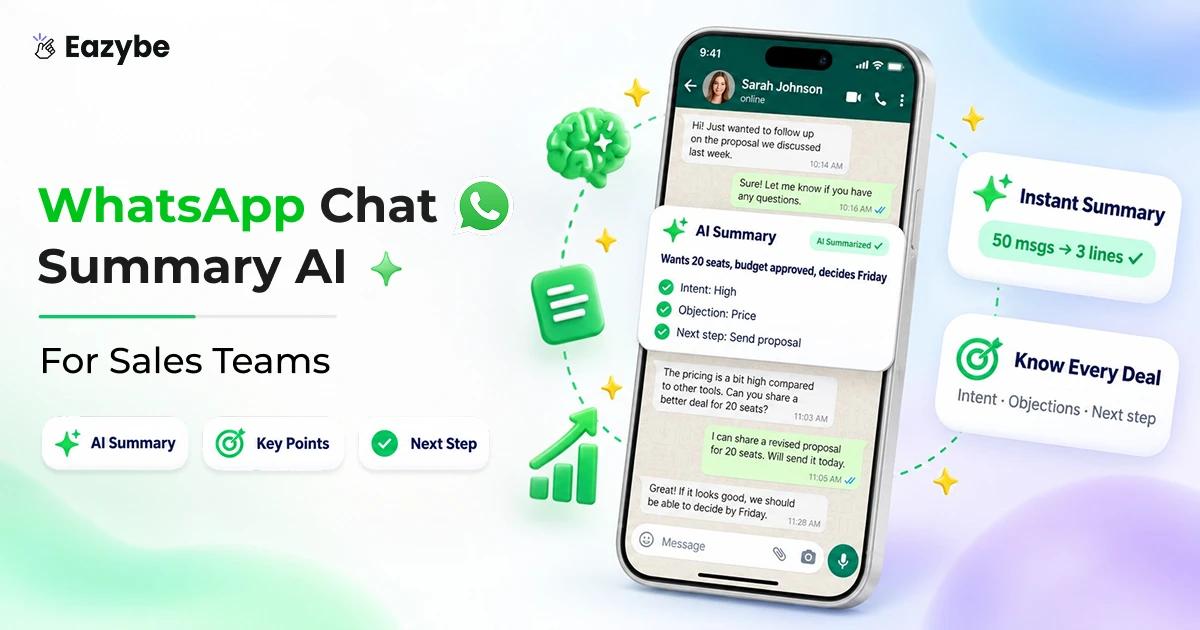
WhatsApp sales intelligence is the layer that reads your conversations and writes back what it found as fields on the contact record.
The word to hold on to is field. A saved chat is a story you have to sit down and read while a field is a value you can sort a thousand contacts by such as reply time four hours or intent high or next step send quote or budget forty lakh. Once a conversation becomes fields WhatsApp stops being a place you check on and starts behaving like the rest of your pipeline.
Most tools stop one step earlier and simply copy the messages onto the contact record which is useful for keeping history but does very little on a Monday because you still have to open every chat before you learn anything from it. Sales enablement works when a rep opens a chat and already knows what the buyer asked three weeks ago. Saving a conversation and understanding one are two different jobs.
| What you are comparing | Chat backup | WhatsApp sales intelligence |
|---|---|---|
| What gets stored | The messages | The messages plus fields |
| Can you sort your pipeline by it | No | Yes |
| Which deals are alive | Open each chat | One filtered view |
| Who fills the CRM | The rep | The conversation |
| What you can report on | Message counts | Reply time and intent and next step |
Backup tells you what was said while sales intelligence tells you what to do about it.
The other thing worth knowing this early is that these fields do not need a CRM to be useful because they can sit in HubSpot or Zoho or Salesforce if you already run one or stay inside Eazybe. If your team uses WhatsApp as the CRM itself. Where the fields live is a storage choice rather than an intelligence choice.
Layer One: Analytics Properties, The Objective Facts

Analytics properties turn every chat into measurable pipeline signals.
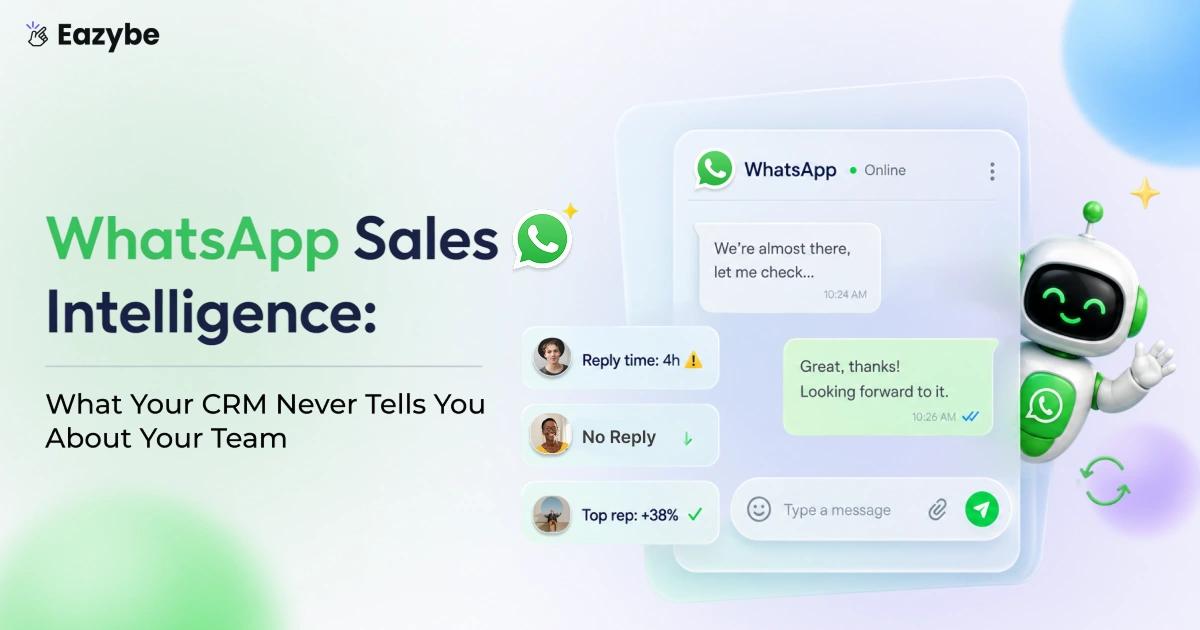
These are the measurable numbers about a conversation that need no interpretation with whatsapp sales intelligence. They answer one simple question which is whether this relationship is being handled well. Tracked per contact and updated on their own:
- Who sent the last message so, an unanswered customer never sits unnoticed.
- When the last message was sent which gives you the freshness of the relationship.
- Average reply time for that contact meaning how fast your team answers this buyer.
- Number of messages sent which is outbound effort.
- Number of messages received which is inbound engagement.
On their own these five already unlock the things managers ask for constantly. Sort every contact by customer sent last with no reply. Pull up the leads with the slowest reply times. See which accounts have gone quiet without anyone flagging it.
They roll up per rep too. Rep Radar stacks the team on reply time and message volume and active hours. Lets you save the view you actually care about. So, a one to one starts from data instead of opinion. It also separates two problems that always looked identical from the outside. WhatsApp sales funnels turn a conversation into a real pipeline stage. Because a rep with big volume and slow replies needs very different coaching. From one who answers in minutes but barely opens a conversation.
Layer Two: Engagement Properties, What The Conversation Means
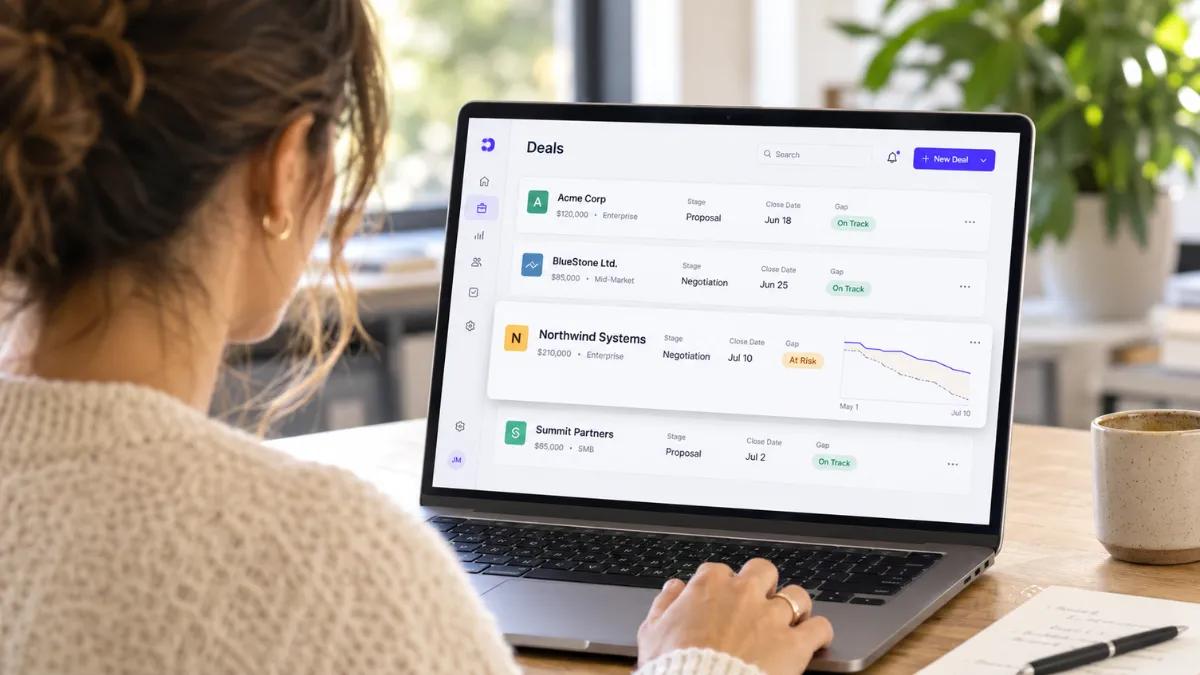
Engagement properties show which deals are alive and which are slipping.
Numbers tell you how much while this layer tells you what is going on. These are the signals the AI reads about the state and direction of a conversation:
- Intent: which is whether this buyer is exploring or comparing or ready to move
- Objection: meaning what is actually holding the deal back such as price or timeline or a competitor
- Urgency: so a request that needs today is not sitting behind one that can wait
- Heartbeat: which is whether the deal is still alive at all
- Escalation: for a thread turning into a complaint that needs a manager now
- Next step: which is what the conversation implies you should do such as send the quote or book the call
- Task to create: so the follow up becomes a real reminder instead of a good intention
This is the layer that changes what a rep does with his morning. Instead of scrolling forty threads to decide who deserves a call the intent and escalation properties surface the three that matter today and everything else waits.
For a manager the most valuable one is heartbeat. Revenue inbox uses these patterns to score the health of every deal so, a buyer whose reply time slipped from four hours to two days gets flagged while there is still time to save it. Your CRM says fifty deals with whatsapp sales intelligence are in progress and this tells you how many of them are real.
You can also keep a person in the loop wherever you want one because WhatsApp copilot drafts the reply and the rep decides whether it goes out.
Layer Three: Industry Properties, The Fields That Fill Themselves
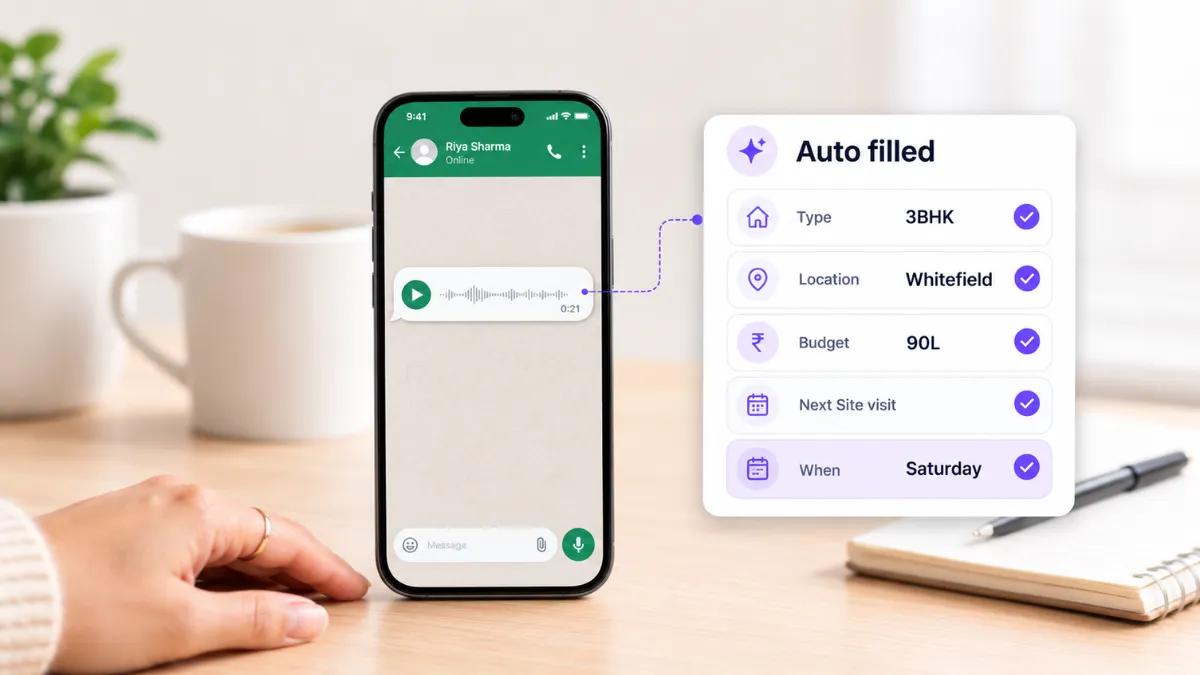
Industry properties fill themselves from the conversation — even voice notes.
This is the layer that kills manual data entry in whatsapp sales intelligence. The conversation gets read for what is being discussed and the fields your business runs on fill in by themselves.
The buyer writes:
Looking for a three bedroom in Whitefield, budget around ninety lakh, can I visit Saturday.
The record fills in:
- Property type → three bedroom
- Location → Whitefield
- Budget → around ninety lakh
- Next action → site visit
- Timeline → this weekend
Nobody opened the CRM. The fields change by industry while the mechanic stays the same, so travel captures destination and dates and travellers, distribution captures SKU and quantity and delivery city, and a clinic captures appointment type and urgency. Anything unusual gets mapped through webhooks. If you are still comparing options a WhatsApp automation tool roundup is a fair place to start.
Why it matters is simple. CRM data quality has always depended on how tired a rep was at six in the evening, And when the conversation fills the record instead of the rep the data starts reflecting what the buyer actually said. It shows up fastest in high value work like real estate. Where one good enquiry is worth a month.
Where WhatsApp Sales Intelligence Lands: In Your CRM Or In Place Of It
Here is the part teams appreciate most, because you choose where the whatsapp sales intelligence lands:
- If you run a CRM: The analytics and engagement and industry values get written into your CRM contact and deal properties. So, they appear in the same views and filters and reports your team already uses. Sync runs both ways and nobody retypes WhatsApp into the CRM. This works with HubSpot, Salesforce and Zoho among others.
- If you do not run a CRM: The same properties are held for you and WhatsApp becomes the CRM, so you filter contacts by intent, sort by reply time, work an assigned inbox and keep the history when a rep leaves. Plenty of teams start on Google Sheets here.
Either way the intelligence is identical. Your CRM choice is a storage decision and not an intelligence decision, and you can start without one and graduate to a proper CRM later without losing history.
Sales Intelligence Works Best When It Reads The Personal Number
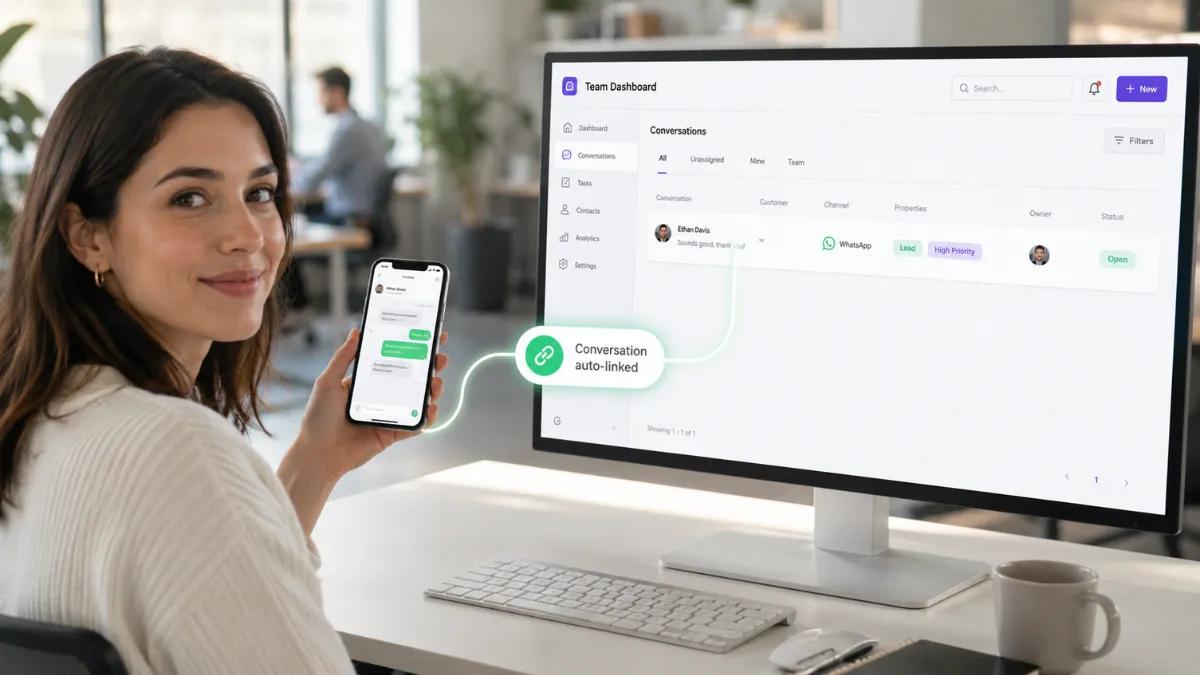
Conversations from personal numbers link straight to the right contact.
Most whatsapp sales intelligence tools cannot do what is described above and the reason has nothing to do with their AI.
Your best deals are not on a company API number. They are on the rep's own phone, on the number the customer saved two years ago. A platform that only reads an API number is blind to exactly the chats that decide your quarter, which is why those dashboards look full and feel empty.
Coexistence fixes it by running the API alongside the app on the same number:
- The rep keeps his number so, the customer never hears from a strange business account.
- Nothing changes in his day because there is no new app to open.
- The company gets the data since those chats now carry properties too.
- No migration so, nobody asks two hundred customers to save a new number.
- Broadcast still works on the same number for templates and campaigns.
It also settles the objection you will hear on day one, because reps resist tracking when it costs them the number their customers trust and stop resisting when it costs them nothing. Sales Intelligence flags real interest and makes sure the rep goes back. Sales closing techniques only work if someone remembers to use them.
Whatsapp Sales intelligence that cannot read a personal number is missing the half where your deals actually happen.
The Honest Limits Of WhatsApp Sales Intelligence
This is useful and it is not magic. So, it is worth being straight about the edges:
- The engagement signals assist rather than decide: Intent and escalation reads are strong prompts for a person and not verdicts, and your reps stay in control.
- Thin conversations give thin properties: The more context a chat carries the better the read, and a two word thread tells any system very little.
- It feeds your qualification framework instead of replacing it: Whatever scoring you already run gets better raw material and not a substitute.
- Auto filled fields still deserve a glance: The typing goes away while the judgement does not, especially on your biggest deals.
Saying this out loud is the point, because whatsapp sales intelligence you can trust is intelligence that is honest about where it stops.
Why WhatsApp Sales Intelligence Fails In Many Businesses
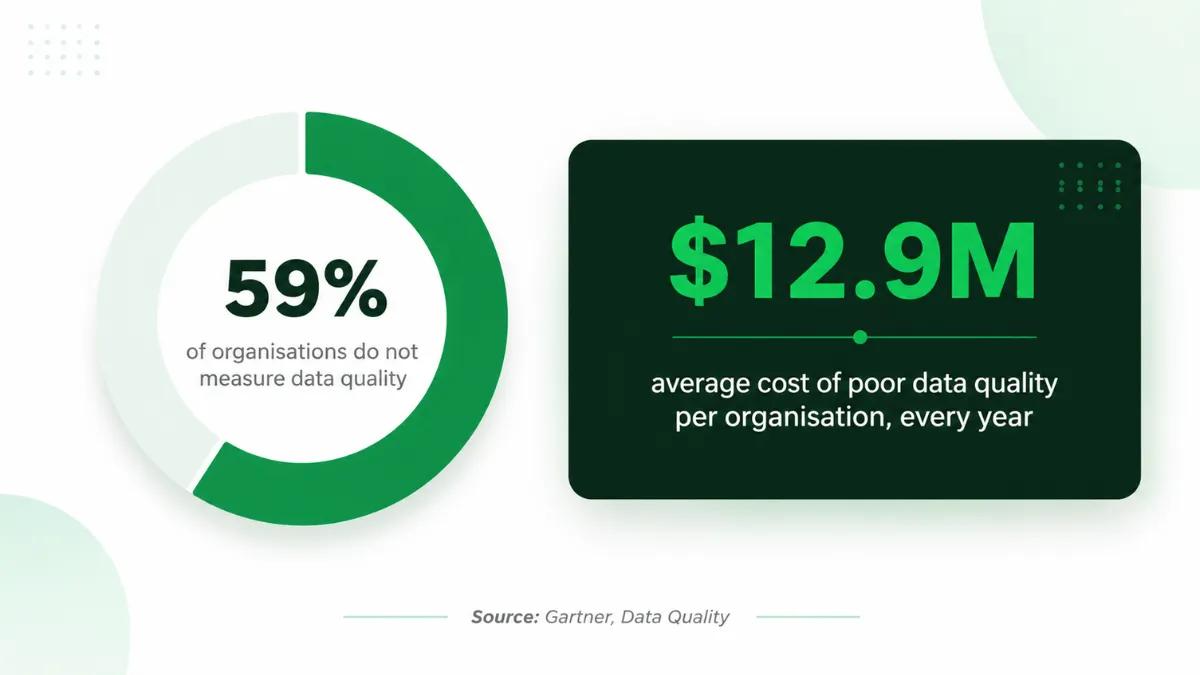
Poor data quality costs companies $12.9M a year — most never measure it.(Source: Gartner. Data Quality)
WhatsApp Sales Intelligence does not fail because the technology is weak. It fails because the data is incomplete. Most customer conversations happen on WhatsApp or a personal phone or some channel nobody is watching. None of it reaches the CRM. So, the team is making calls on half a picture and does not know it.
That gap costs money. Gartner puts the average cost of poor data quality at around 12.9 million dollars a year for an organisation. Gartner also found that most companies never measure their data quality at all. So, they cannot even see the leak.
But the real problem is quieter than any number. The most valuable conversations your team has are never written down anywhere. You do not lose those deals loudly. You lose them without ever knowing they were there.
How Eazybe Turns WhatsApp Into Sales Intelligence Platform
Eazybe runs as a Chrome extension over WhatsApp Web and connects whichever number your team already sells on, whether that is a personal number or the Business App or the API. There is no migration and no separate app for reps to open, which is the only reason adoption holds after week two.
On top of that connection it does three things with best Whatsapp sales intelligence:
- Measures every conversation: for reply time and last message and volume on each contact.
- Reads every conversation: for intent and objection and urgency and next step and surfaces the ones that need a person.
- Writes all of it as properties: into HubSpot or Zoho or Salesforce and the other integrations, or holds them inside Eazybe when WhatsApp is the CRM.
The agents split the work by stage rather than doing one generic pass. One logs every chat to the right contact and deal, one qualifies inbound leads around the clock, one watches for deals going quiet, and one answers repeat questions from your knowledge base. WhatsApp automation makes sure the follow up still happens when a rep is busy. This is also the practical difference between an agent and a chatbot, since a bot follows a script while an agent reads the situation and acts, which we cover in AI agent vs chatbot.
Because it works as a connector your data lands in your own CRM or your own storage rather than sitting locked inside somebody else's platform.
What Research Says About Artificial Intelligence In Sales
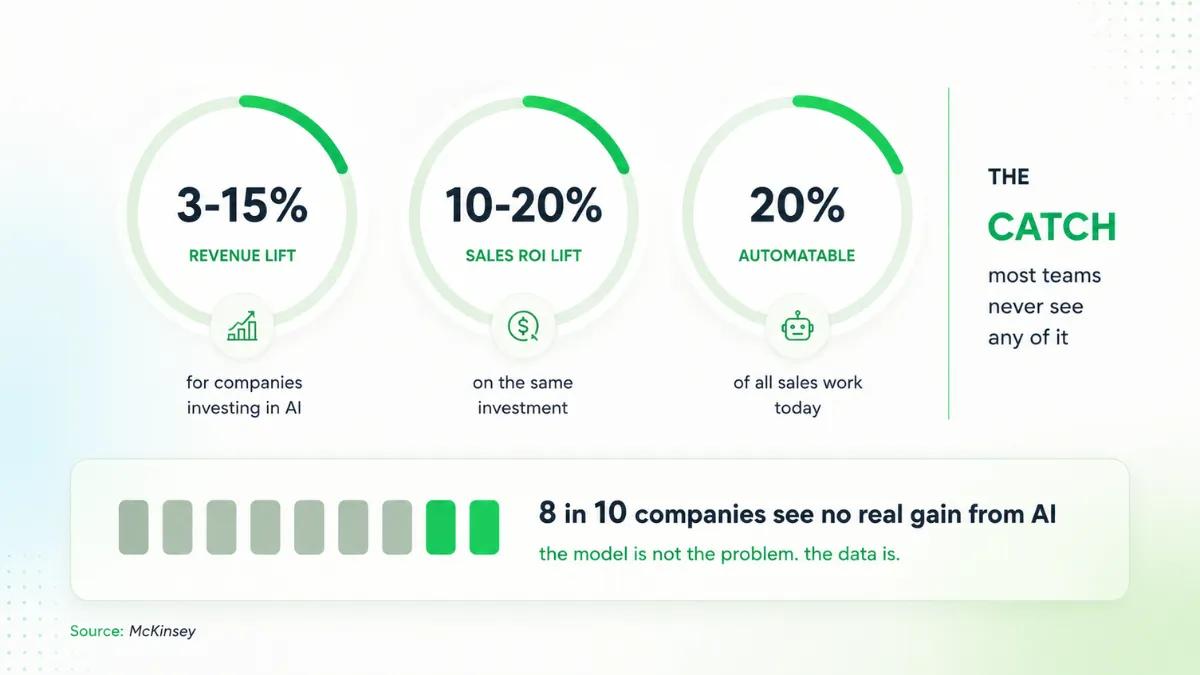
AI lifts revenue 3–15% — but 8 in 10 companies see no gain, because of the data.(Source: McKinsey)
Artificial intelligence in sales is already moving real numbers. McKinsey found that companies investing in AI see a revenue lift of 3 to 15 percent and a sales ROI lift of 10 to 20 percent. About a fifth of sales activity can be automated.
But the same research has a second finding most vendors skip. Nearly eight in ten companies see no real gain from AI at all. The reason is weak data. A WhatsApp team inbox gives each of those chats an owner so nothing sits unattended.
So, the lesson is blunt. An ai sales intelligence platform is only as good as what you feed it. Give it a CRM full of holes and it will give you wrong answers faster. Give it real customer conversations and it starts to pay for itself. That is why sales efficiency is becoming the real scoreboard instead of raw activity counts.
Capture first. Analyse second.
Who Needs WhatsApp Sales Intelligence Solution And Who Can Skip It
It fits you if you run five or more reps on WhatsApp, they sell on their own numbers or a mix of numbers, and you cannot say which deals went quiet last week without asking someone. It fits best where deals are high value and slow. So, real estate and travel and education and distribution, because one missed follow up costs more than a month of small orders.
Skip it if your problem is sending campaigns to fifty thousand contacts, which is a marketing job and not an intelligence one. Skip it too if one person handles every chat, since you can already see everything. For that stage the WhatsApp sales best practices guide is a better start.
Most teams sit in between, which is why pricing is per seat and the properties start on the entry plan with the AI reading added when you need it.
Verdict: Stop Reading Chats And Start Reading Signals
Saving WhatsApp chats to the CRM was the win a few years ago, because at least the conversations were no longer trapped on someone's phone. The win now is WhatsApp sales intelligence, where every chat carries reply time and intent and next step and a health score. So, a week of selling arrives as something you can open rather than something you have to reconstruct.
If you cannot answer which deals are alive and who is slow and what happens next without asking twelve people, more chat backup will not fix it. What you need is for the conversations to start talking back.
See what your team's WhatsApp chats have been telling you all along.
Start free or book a demo and watch the properties land on your own contacts before your next Monday meeting.